A product brand should use stock packaging when an existing structure already fits the product and the brand can be carried by print or labels, and custom packaging when the product, the shelf or the range needs a structure of its own. In the UK, Schedule 1 of the Packaging (Essential Requirements) Regulations 2015 applies to both: volume and weight limited to the minimum adequate amount.
What stock and custom packaging mean
Stock packaging is a structure a supplier already makes and sells from a catalogue: a standard box, pouch, jar, tin or bottle in set sizes. The brand appears through what is added to it, such as a printed sleeve, a label, a sticker or print applied to the stock structure.
Custom packaging is a structure made for the product. Its size, shape, opening and inner parts are drawn for what goes inside, and the artwork is drawn on that new structure.
Between the two sits a third option: a stock structure with fully custom print. The box or pouch comes from the supplier’s range, and the graphics cover it edge to edge. Our packaging and product design page describes the final stage of a project as production artwork “drawn on the production partner’s own dieline”, and a stock structure has a dieline like any other.
So the choice is rarely between a plain box and a bespoke one. It is a choice about which of 2 layers is made for the brand: the structure, the print, or both. Each of the 3 options can look like a deliberate brand decision when the layer that is made for the brand is designed properly.
Start with the product, not the box
The order of decisions settles much of the choice before it is made. Our service page puts it this way: “The work starts with the structure, not the graphics.” It continues: “Pack format, material, closure and production method decide what the artwork can do, and choosing artwork first is how a design becomes unbuildable at the quoting stage.”
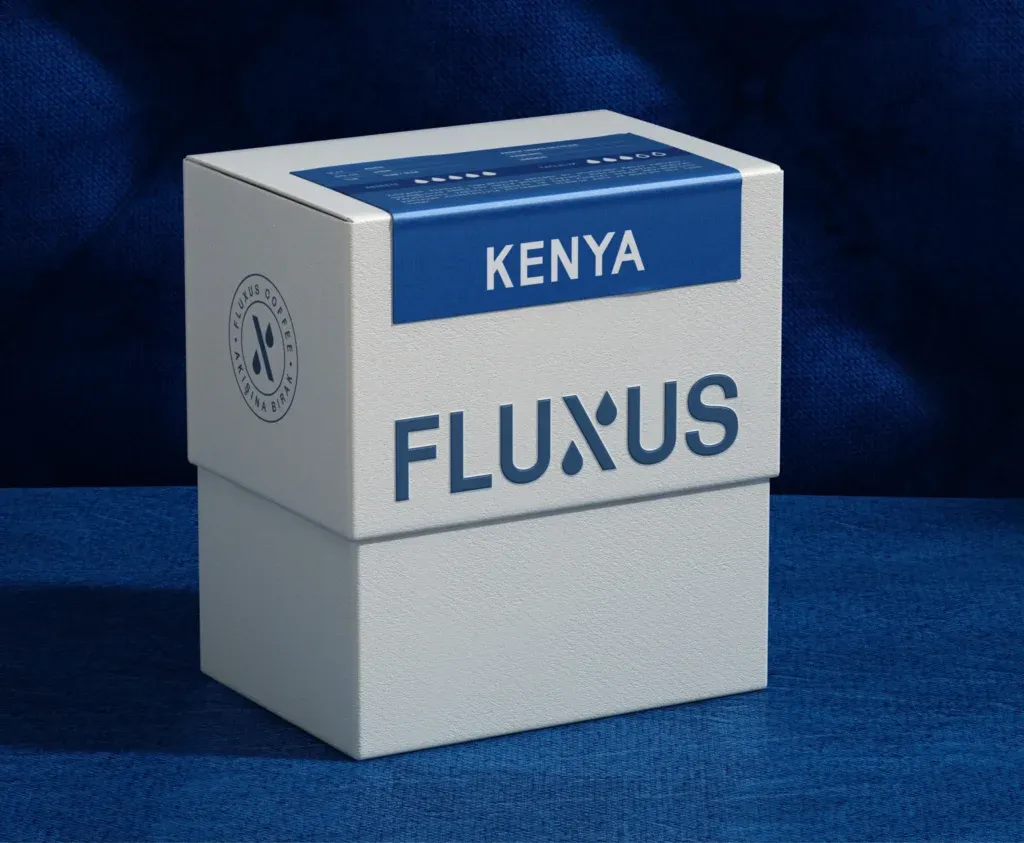
For the stock or custom question, that means 4 product facts come first. The product’s size and shape decide whether a standard structure holds it without extra fill. Its fragility decides how much inner support it needs. The way it is sold, on a shelf, in a chiller, through the post or at an event, decides which side of the pack the buyer sees first. And the way it is used decides the opening and whether the pack is kept or thrown away.
If a stock structure matches all 4, the brand’s design work moves into the print. If it fails one of them, the gap has to be filled somehow, with inserts, padding, a bigger outer box or a structure that fits, and each of those is a design decision with a cost the supplier can quote.
Writing the 4 facts down before asking for quotes also makes quotes comparable, because every supplier is pricing the same brief.
Where stock packaging fits
Stock packaging fits when an existing structure already does the job and the brand does not depend on the shape of the pack to be recognised. A first product launch is one such case: the brand can learn what sells, what is returned and what buyers say before committing to a structure of its own.
It also suits a range in which many products share one format. If every product in a range fits the same jar or pouch, the system lives in the print, and the structure can stay standard while the range grows. Our article on how to create a packaging system that can grow covers the rules that let one format carry many products: which elements stay fixed and which change per product.
The limits of stock packaging come from the catalogue. The sizes are the sizes the supplier makes, the shapes are the shapes in the range, and other brands buy the same structures. A brand using a stock structure is relying on its print, colour and typography to stand apart from the products beside it on the shelf.
Those limits are worth checking with the supplier before design starts: which sizes exist, which print methods the structure accepts, and how long the structure has been and will be in the catalogue.
Where custom packaging earns its place
Custom packaging earns its place when the structure itself has a job that no stock option does. 3 situations describe those jobs.

The first is fit. A product whose shape or size falls between standard sizes either moves inside a box that is too large or needs inserts to hold it, and a structure drawn for the product can remove both.
The second is recognition. In some categories the shape of the pack is what a buyer looks for, before any colour or name. A structure that belongs to one brand gives the shelf a signal that print on a shared structure cannot. Our service page makes a related point about distinctive ranges: “A distinctive range is also designed to be found again: someone who bought one product can spot the next by its color.” A custom structure adds shape to that signal.
The third is use. The way a pack opens, closes, dispenses or displays the product can be part of what the buyer pays for, and a stock structure fixes those choices in advance.
Custom packaging also brings decisions that stock packaging has already made: material, tooling, testing and the supplier’s production limits. Our article on packaging that does not match the brand covers what happens when those decisions are taken after the graphics.
| Question | Stock packaging | Stock structure, custom print | Custom packaging |
|---|---|---|---|
| Who designs the structure | Supplier, from the catalogue | Supplier, from the catalogue | Drawn for the product |
| Where the brand appears | Labels, stickers, sleeves | Print across the whole structure | Structure and print |
| Fit to the product | Standard sizes only | Standard sizes only | Sized to the product |
| Recognition from shape | Shared with other brands | Shared with other brands | Can belong to the brand |
| UK essential requirements | Apply | Apply | Apply |
The size rule that applies to both
In the UK, the choice between stock and custom does not change the rules the pack has to meet. The Packaging (Essential Requirements) Regulations 2015, regulation 4(1), says that a responsible person “must not place any packaging on the” market of Great Britain “unless it complies with the essential requirements.”
The first of those requirements is in Schedule 1, paragraph 1(1): “Packaging must be so manufactured that the packaging volume and weight is limited to the minimum adequate amount to maintain the necessary level of safety, hygiene and acceptance for the packed product and for the consumer.” Paragraph 1(2) adds that packaging must be designed, produced and commercialised so that it permits reuse or recovery, including recycling, and minimises its impact on the environment.
The rule bears on both options. A stock box chosen one size too large, with fill to stop the product moving, is a design that has to be justified against paragraph 1(1), however standard the box. A custom structure drawn for the product can be sized to it from the start, and still has to meet the same paragraph.
This article states what the regulations say. Whether a particular pack complies is a question for whoever is responsible for placing it on the market.
Who is responsible for the packaging
The UK’s extended producer responsibility (EPR) scheme for packaging is the second rule that does not depend on the choice of structure. The government guidance check if you must comply with EPR for packaging lists 7 packaging activities that make an organisation a producer, and the first is “filled packaging being supplied under your own brand”.
The guidance also covers the case where someone else packs the product: if you import or pack goods for a large producer and the packaging carries that producer’s brand, then “the brand owner will be the obligated producer and must include the packaging in their threshold calculation.”
The guidance does not distinguish between stock and custom structures. Packaging that carries the brand is packaging supplied under the brand, whichever catalogue the structure came from. For a large producer, the guidance lists obligations that include reporting packaging data every 6 months and keeping the required data for 7 years; a small producer reports every year.
Whether a brand is a large or small producer depends on thresholds set out in the guidance, which this article does not reproduce. The guidance was last updated on 19 August 2026, and the current version is the one to read.
Questions that settle the choice
The questions below turn the choice into answers a brand and its suppliers can write down. Most of them have a factual answer; the last ones are about the brand.
- Does a stock structure hold the product without extra fill or a larger outer box?
- Which side of the pack does the buyer see first, and does the stock structure put the brand there?
- Will the next products in the range fit the same structure?
- Which print methods does the stock structure accept, and does the artwork need any of the others?
- What are the supplier’s minimum order and lead time for the stock option and the custom option, quoted on the same brief?
- Does the shape of the pack need to belong to the brand, or can print and colour carry the recognition?
- Who is the responsible person and the producer for this pack in each market where it is sold?
- How long does the brand expect to keep this structure before the range changes?
When all 8 answers point the same way, the choice is made. Where they split, the stock structure with fully custom print sits between the 2 options, and it can be revisited once the range has grown.
How MarkaWorks approaches the choice
MarkaWorks is a branding agency for product brands. We design packaging in both directions: “You can commission packaging by itself, and MarkaWorks works in both directions.” A brand that already has an identity gets packaging built to it, and a brand starting from nothing gets the identity and the packaging designed together.
In practice our packaging projects begin with the structure question set out above, before any graphics. When a stock structure fits, the work goes into the print and the range rules, and the artwork is drawn on the supplier’s dieline. When it does not, we design the structure and the artwork together so that the quote matches the design. Our service page lists 4 categories with their own rules, among them coffee and tea with 20 published case studies and food and drink with 17.
If you are choosing between stock and custom packaging for a launch or a range, send us the product, the sales channels and the markets through our contact page, and we will set out which layer should be made for the brand.
Questions brand owners ask about custom and stock packaging
What is the difference between stock and custom packaging?
Stock packaging is a structure a supplier already makes and sells from a catalogue, branded through labels, sleeves or print. Custom packaging is a structure drawn for the product, with its own size, shape and opening, and artwork drawn on that structure.
Can stock packaging look like a brand rather than a generic box?
Yes, when the print carries the brand. A stock structure with full custom print, a fixed type hierarchy and a colour system can read as one brand, though the shape itself is shared with other products using the same structure.
When is custom packaging worth it for a product brand?
When the structure has a job no stock option does: holding a product that falls between standard sizes, giving the shelf a shape that belongs to the brand, or opening, dispensing and displaying the product in a way the buyer values.
Do UK packaging rules differ for stock and custom packaging?
Not in the texts cited here. Schedule 1 of the Packaging (Essential Requirements) Regulations 2015 limits volume and weight to the minimum adequate amount for any packaging, and the EPR guidance counts filled packaging supplied under your own brand either way.
Should a new brand start with stock packaging?
When an existing structure fits the product and the brand can be carried by print, stock packaging lets the brand learn from its first sales before committing to a structure, and the print system can move to a custom structure later.
What each option means, where each one fits, the UK rules that apply to both, and the questions that settle the choice for a product brand.
More brands we brought to life: