What changes when a pack shrinks to 100 ml, 10 ml or 2 ml: the sizes airports allow, the label text that still has to fit, and how a set of small packs reads as one product.
Design a travel size or a discovery set as a pack of its own. Redraw the front for the smaller surface, keep the brand name and the variant readable at arm’s length, and decide early where the mandatory text will sit. Most airports cap carry-on containers at 100 ml, and EU cosmetics rules drop the content statement below 5 ml.
Why a small pack needs its own design
A full-size bottle and its travel version share a name, a formula and a brand. They do not share a surface. When a 100 ml bottle becomes a 10 ml spray, the printable area falls faster than the height does, the curve of the container gets tighter, and the cap takes up a larger share of what the customer sees. Artwork that is simply reduced ends with type too small to print cleanly.
So treat each small format as a separate task and ask 3 questions before any artwork starts:
- What has to be readable on the container itself?
- What can move to the outer packaging, a card or a leaflet?
- What is the pack for: trial, travel or a gift?
The third question changes the answer to the first 2. A travel size usually serves someone who already uses the product, so it should look like the bottle on their shelf at home. A discovery set serves someone who is still choosing, so the names have to be easy to tell apart. If the range has no written rules yet, our guide to a packaging system that can grow explains how to set them before the first mini is drawn.
Which sizes do airports allow in hand luggage?
If the pack is sold as a travel size, the buyer expects it to pass airport security, and the limits are published. In the United States, the Transportation Security Administration allows one quart-sized bag of liquids, aerosols, gels, creams and pastes in a carry-on, and says: “These are limited to travel-sized containers that are 3.4 ounces (100 milliliters) or less per item.”
The United Kingdom publishes the same ceiling. The GOV.UK guidance on liquids says: “At most airports, you cannot take liquids in containers larger than 100ml through security. This still applies if the container is only part full.” Where an airport asks for a separate bag, it holds no more than a litre and measures approximately 20cm x 20cm, and each passenger is limited to one.
Three design decisions follow:
- The limit applies to the container, so a 150 ml bottle that is half full fails. Keep travel formats at 100 ml or below and print the volume where it can be found quickly.
- A travel kit has to fit the bag. Lay the minis out against a 20cm x 20cm square before the outer pack is designed.
- The rules differ by airport. The same GOV.UK page notes that some airports may allow containers of up to 2 litres, so state the volume on the pack and leave phrases such as “airport approved” off it.
What does the label still have to carry at 5 ml?
A smaller container does not make the mandatory text optional, but the law recognises that some packs are too small to carry all of it. For cosmetics sold in the EU, the list is in Article 19 of Regulation (EC) No 1223/2009. It requires the container and the packaging to carry the information “in indelible, easily legible and visible lettering”, and then sets out where a small pack may do things differently.
The content statement is the clearest case. The nominal content must be given by weight or by volume, “except in the case of packaging containing less than five grams or five millilitres, free samples and single-application packs”. A 2 ml sample vial is therefore not required to state its volume, while a 10 ml travel spray is.
The batch number belongs on the container, but where the product is too small, Article 19 says the information “need appear only on the packaging”. The ingredient list can sit on the outer packaging alone. When there is no room for precautions and ingredients, the regulation says “the information shall be mentioned on an enclosed or attached leaflet, label, tape, tag or card”, with a symbol on the pack that points the buyer to it.
Article 19 gives no small-size allowance for the name and address of the responsible person, so plan space for it on the container as well as the box. The language of several items is set by the country of sale; our guide to what changes on the label in a second market covers that step. The full list is in our guide to what has to be on a cosmetics label in the UK and EU. The table below places each item.
| Information | On the container | Allowance for small packs in Article 19 |
|---|---|---|
| Name and address of the responsible person | Required | None stated; it must be on the container and the packaging |
| Nominal content (weight or volume) | Required from 5 g or 5 ml | Not required under 5 g or 5 ml, on free samples or on single-application packs |
| Date of minimum durability or period after opening | Required | None stated; the period after opening applies when durability is over 30 months |
| Precautions for use | Required | May go on an enclosed or attached leaflet, label, tape, tag or card, with a symbol on the pack |
| Batch number | Required | May appear only on the packaging when the product is too small |
| Function of the product | Required unless clear from its presentation | Not needed where the presentation makes the function clear |
| List of ingredients | May be on the packaging alone | May go on a leaflet, label, tape, tag or card, with a symbol on the packaging |
Redraw the front for the surface you have
Once the mandatory text has a home, the front of a small pack has one job, which is to be recognised. Rank what is on the full-size front. On most packs the order is the brand name, then the variant, then the product type, then everything else. On a mini, the first 2 stay, the third stays if there is room, and the rest moves.
Then redraw. A logo that sits comfortably at 40 mm wide may need a simpler version at 12 mm, with thin strokes thickened or a tagline removed. Fewer lines of type at a size that prints cleanly are better than every line from the large pack at a size nobody can read. Our article on how small type can be on packaging gives the working limits for print.
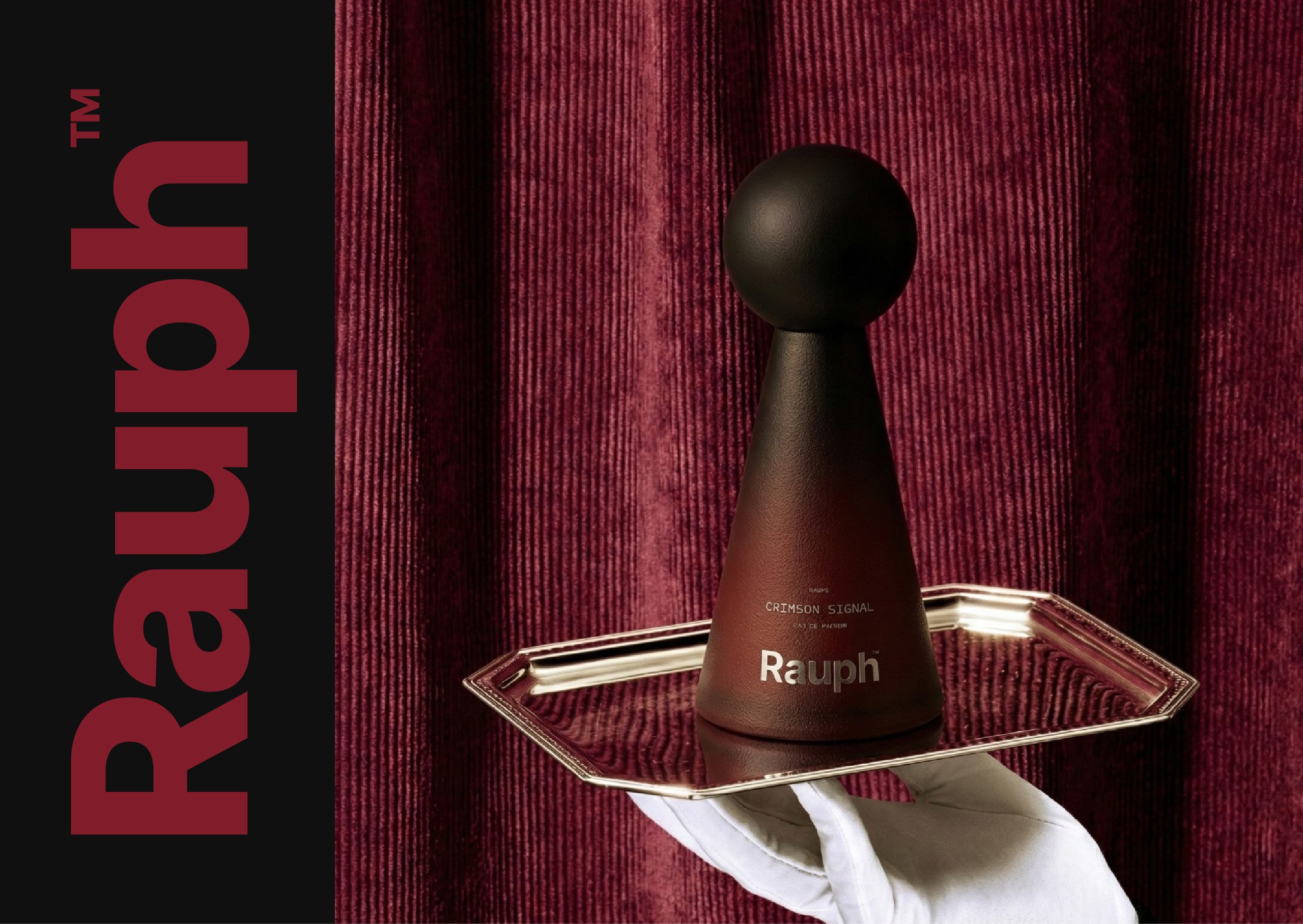
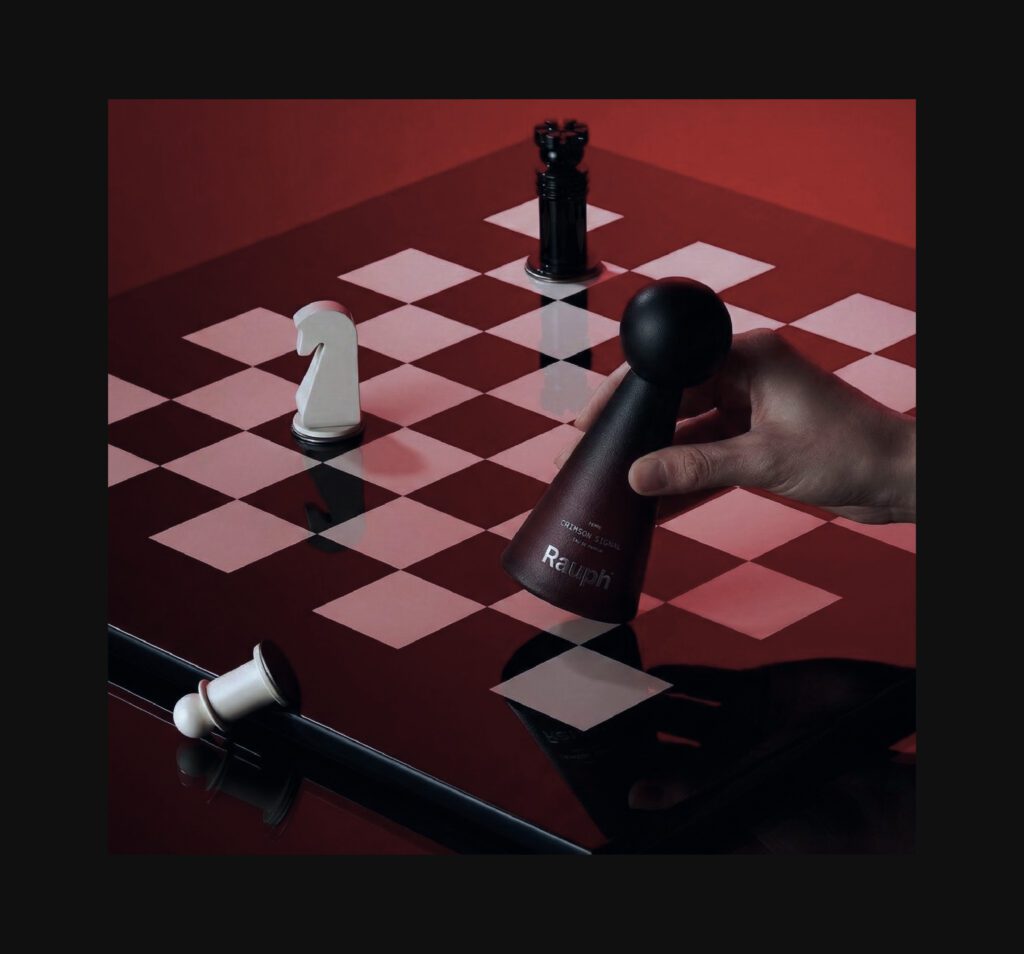
Restraint on the full-size pack makes this easier. The Rauph identity was built that way; the case study says: “Strong contrasts were avoided in favor of subtle transitions, considered spacing, and balanced proportions.” A label of 3 short lines can be made smaller without losing anything.
Where should the rest of the information go?
Everything that left the container still has to be easy to find. There are 4 usual places for it, and a good small-format system decides which one each line of text goes to before the artwork starts.
- The outer carton. It has flat panels and far more area than the vial inside it. The ingredient list, the precautions and the responsible person’s address fit here at a readable size.
- A leaflet or folded insert. Useful when the text has to appear in several languages. It needs its own artwork file and its own proofreading.
- A card or tag. In a discovery set, one card can carry the shared text for all the vials and tell the buyer what each one is.
- The set box itself. The base or the back panel is often the largest flat surface in the whole pack.
A QR code is a good place for the longer story or a how-to-use video. Do not rely on it to carry mandatory text: Article 19 lists a leaflet, label, tape, tag or card, and a link is not on that list.
How do you make a discovery set read as one product?
A discovery set is bought as a single item, so the closed box is the pack. It needs the brand name, a plain statement of what is inside, such as 5 fragrances at 2 ml each, and the same logo position and type as every other pack in the range.

Inside, the set works when each vial can be identified without picking it up. Each vial sits in its own recess in a tray, so a missing vial is obvious. The variant name faces up or forward when the box is opened. And the order means something: lightest to strongest, or morning to evening.
Names are often too long for a 2 ml vial. Numbering solves this: print a number on each vial and repeat it on a card that gives the full name and a line of description. The card also holds the text that did not fit on the vials.
The set should make the next purchase easy. Someone who liked vial 3 has to be able to find the full-size bottle, so the name on the vial, the card and the full-size pack must match exactly. Our article on fragrance branding as one system goes through the name, bottle and box in more detail.
Range rules and production for small packs
A range that already has rules handles size as one more variant. The logo position, the order of the type and the colour or mark that identifies each product stay where they are on the mini. Write the small formats into the brand guidelines when they are designed: the simplified logo and the smallest size it can be used at, and the lines of text that stay on the container at each volume. The number of artworks multiplies quickly: 4 products in 3 sizes is 12 labels. Our guide to packaging for many flavors, sizes and formats shows how to build the files.
Production sets limits too, so settle 3 things with the supplier before the artwork is final:
- The container. A stock vial, tube or jar fixes the label area, the cap and the shoulder shape, so get the supplier’s drawing first. Our comparison of custom and stock packaging covers when each makes sense.
- The print method. A label on a narrow container has to bend tightly without lifting, and small type needs a process that holds fine detail. Our guide to printing methods and minimum orders explains the trade-offs.
- The proof. Print the artwork at 100% size, wrap it around the real container, and read it at arm’s length. If the variant name cannot be read that way, the design is not finished. Our article on testing packaging before launch lists the other checks.
How MarkaWorks designs travel sizes and discovery sets
At MarkaWorks, packaging projects start with the structure. Our packaging and product design work begins with the pack format, material, closure and production method, because those decide what the artwork can do.
We design minis and sets as part of the range. Our range systems fix the constant elements first, which are the mark position, the type hierarchy, the information block and the shelf-facing panel, and then define what is allowed to change for each variant. A travel size or a discovery set is one more application of that rule.
Cosmetics, skincare and fragrance are categories we work in regularly, and our cosmetics and skincare projects page lists 15 case studies. In that category the pack has to hold ingredient lists at small type sizes, and it usually has secondary packaging. Both get harder as the pack gets smaller.
You receive production artwork drawn on your production partner’s dieline for each size, the set box and any card or leaflet, together with the working files.
If you are planning a travel size, a sample or a discovery set, you can work with us on it. Tell us about the range and the sizes you have in mind, and we will come back with how we would approach it.
Questions brand owners ask about travel sizes and discovery sets
What is the largest size that counts as a travel size?
For carry-on luggage the working ceiling is 100 ml per container. The TSA limits travel-sized containers to 3.4 ounces (100 milliliters) or less per item, and GOV.UK says most UK airports do not allow containers larger than 100ml through security, even when they are only part full.
Does a 2 ml sample vial need the volume printed on it?
Not under the EU cosmetics regulation. Article 19 requires the nominal content except for packaging containing less than five grams or five millilitres, free samples and single-application packs. The other items on the list still apply, although some of them may move to the outer packaging.
Can the ingredient list go on the box instead of the vial?
Yes. Article 19 says the list of ingredients may be indicated on the packaging alone. Where even that is impossible for practical reasons, it can go on an enclosed or attached leaflet, label, tape, tag or card, with a symbol on the packaging that refers the buyer to it.
Should a travel size look exactly like the full-size pack?
It should be recognised as the same product, which is different from being a scaled copy. Keep the logo position, the colour and the variant name, simplify the logo if the strokes become too thin, and move secondary text to the carton so the front stays readable.
More brands we brought to life: