Fragrance branding works when the name, the bottle and the box are planned as one system, because the buyer cannot smell the product through the pack. The name has to be said aloud and checked as a trade mark, the bottle carries the information that must stay on the container, and the box takes what the rules let you move off it. The 3 parts are set out below.
Why the three parts have to be planned together
The MarkaWorks case page for Odeur Botanical Candles, a fragrance-led candle brand, states the problem directly: “the thing being sold cannot be sensed through the pack.” The same page goes on: “Everything the buyer knows before purchase has to be carried by type, color, and material.”
That applies to a perfume as much as to a candle. The name is what a buyer says and hears, the bottle is the object they hold, and the box is what they see on a shelf or in a delivery. If the three are designed at different times by different people, each one makes its own promise about the scent.
For Amos Fragrances, a men’s perfume brand, the work covered the visual identity, the logo, the art direction and the label and packaging design, built as one system from the first concept to the final packaging. The rest of this article follows that order: name, bottle, box, then the range.
The name: say it aloud and check it before anything is drawn
A fragrance name has two jobs. It has to be remembered after one hearing, and it has to be yours to use.
The first job is a test you can run yourself. On the YU project, a tea brand MarkaWorks named, the name was chosen to stay short, memorable and pronounceable across languages, and the case explains why: a brand selling outside its home market “has to survive being said aloud by people who do not speak the language”. A perfume sold in more than one country faces the same test at every counter.
The second job is legal. The GOV.UK guide to registering a trade mark gives the name of your product as an example of what you can register, and says the Intellectual Property Office will check that a new mark is not the same as, or similar to, an existing one. It also says a UK registration only protects your brand in the UK and the Isle of Man, and that a trade mark lasts 10 years before it has to be renewed. If the brand will sell abroad, the name needs checking in those markets too.
The guide lists putting the ® symbol next to your brand as one of the things you can do once the mark is registered, so whether the ® appears on the bottle depends on the registration, not on the design. The name and its trade mark status have their own part in writing a branding brief, and whether you can trademark a colour covers the other half of the question.
What the bottle has to carry
In Great Britain, Article 2 of Regulation 1223/2009 defines a cosmetic product to include substances meant to be applied to the body for “perfuming them”, so a perfume falls under the cosmetics rules. Article 19 of the same regulation sets out what its labelling must show. The article says the information has to appear on the container and the packaging “in indelible, easily legible and visible lettering”. The list includes:
- the name or registered name and address of the responsible person
- the nominal content, by weight or by volume
- the date of minimum durability, or for products that keep for more than 30 months, the period after opening, shown with the symbol set out in Annex VII
- particular precautions for use
- the batch number or another reference that identifies the product
- the function of the product, unless it is clear from the presentation
- the list of ingredients
For a fragrance, one detail of the ingredient list matters to the design. The article says perfume and aromatic compositions are listed under the terms “parfum” or “aroma”, with certain substances named in addition. The list is set in descending order of weight.
A bottle is a small, often curved surface, and every one of these items competes with the name for space on it. Food brands face a similar rule about whose name goes on the pack, covered in selling to retailers for the first time.
What can move from the bottle to the box
The same article lets some information leave the container. The list of ingredients “may be indicated on the packaging alone”, which means the outer box. The batch number may also appear only on the packaging where the product is too small to carry it.
Where precautions or ingredients cannot practically be labelled as required, paragraph 2 allows an enclosed or attached leaflet, label, tape, tag or card, referred to on the pack by a symbol set out in Annex VII unless that is impracticable.
The box is not a free surface, though. Most items in the list still apply to the container and the packaging together, so the box carries its own mandatory block alongside the brand.
The Odeur case shows the same decision on a candle. The labels are small and often curved, so the information on them was cut to what a buyer uses at the shelf, and the rest moved to the outer pack. Deciding early which items stay on the bottle and which go to the box is what frees the bottle for the name.
One system across a range of scents
A fragrance brand with more than one scent needs a system that tells them apart without looking like several brands.
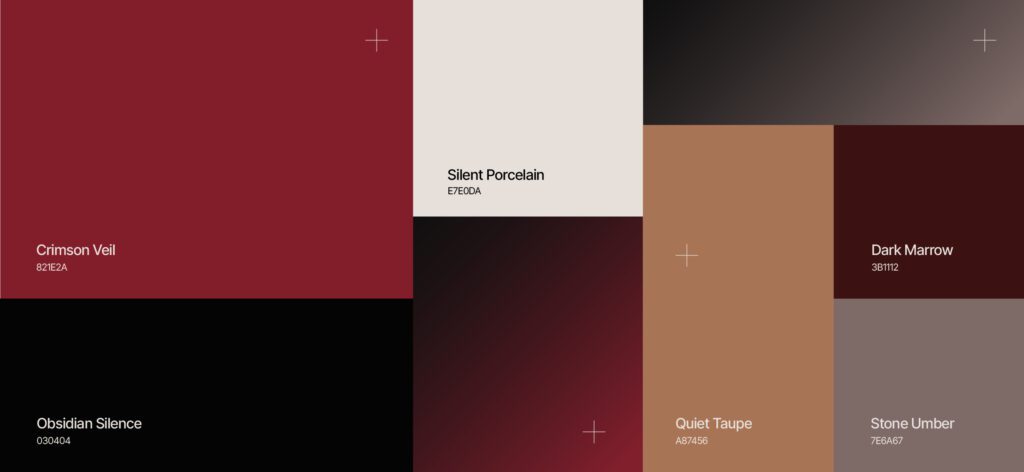
On Odeur, colour defines each scent: earthy neutrals, deep blues, warm ambers and muted terracotta, inside one shared structure. The case notes that a buyer returning for a scent they liked finds it by colour, which it calls “the only reliable shortcut when the product itself is sealed”.
On Atolye Candle, a restrained palette keeps the scent profile central, with variant cues in colour and form. On Oda Candles, the label layouts put the scent and the main product details first, with subtle variant cues inside one unified system.
The common rule is a fixed structure with one variable. If a later scent needs a new layout, the range stops reading as a family. The point where a new product should become a separate brand instead is covered in one brand or a family of brands.
Material and finish carry the scent too
Because the scent is sealed, the material is part of what the buyer reads. On Odeur, amber glass vessels add what the case calls “material warmth that a printed surface cannot imitate”. On Oda, the material and finishing choices were matched to a premium candle.
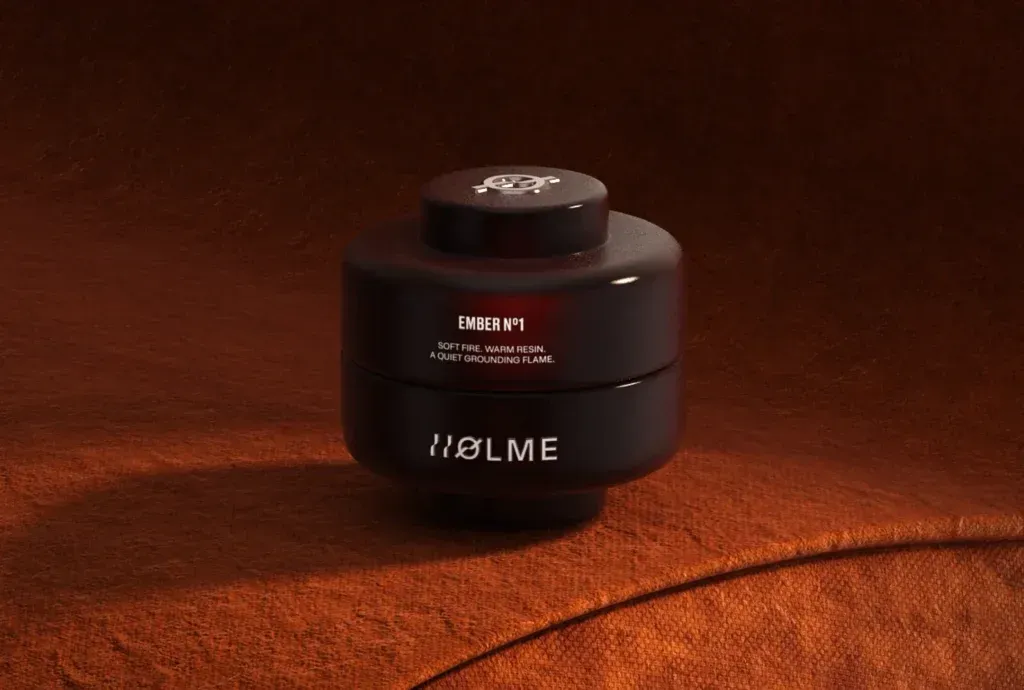
These choices affect the label as well. Glass colour can change how printed type reads, and a curved or textured surface limits how small the mandatory text can go before it stops being legible. The minimum sizes for food are in how small type can be on packaging; for cosmetics the test in Article 19 is that the lettering is indelible, easily legible and visible, so the type has to be checked on the real material.
An order of decisions that saves redrawing
The table below puts the parts in the order in which each depends on the one before. Each line depends on the one before it: the bottle cannot be laid out until the name is fixed, and the box cannot be laid out until you know what left the bottle.
If the order is reversed, the bottle may end up having to fit a name and a mandatory block it was not drawn for. If you are briefing a designer, what to prepare before a packaging project starts lists the documents that help at this stage.
| Part | What to decide | What limits it |
|---|---|---|
| Name | The name, how it sounds and whether it can be registered | The IPO check against existing marks; a UK mark covers the UK and the Isle of Man only (GOV.UK) |
| Bottle | What stays on the container and how the name sits with it | Article 19 items on the container, in indelible, easily legible and visible lettering |
| Box | What moves to the box and how the brand sits with the mandatory block | Ingredients may go on the packaging alone; batch number too if the product is too small (Article 19) |
| Leaflet or tag | Whether precautions or ingredients need an enclosed or attached leaflet, tag or card | Allowed only where labelling is impossible for practical reasons (Article 19, paragraph 2) |
| Range | The one variable that changes between scents | A fixed structure the next scent can use without a new layout |
Where this article stops
This article covers the Great Britain text of Regulation 1223/2009, Article 19, and the GOV.UK trade mark guide, both read on 27 October 2026. It does not cover the rules in the EU, the US or the Gulf, hazard labelling that can apply to fragrance products, industry standards for fragrance ingredients, or the safety assessment a cosmetic product needs before it is sold. It does not give a trade mark opinion on any name. For a specific product, check the current law with the responsible person and get trade mark advice in each market.
Questions brand owners ask about fragrance branding
What is fragrance branding?
It is the name, the identity, the bottle and the box of a perfume or scented product, designed as one system. Because the buyer cannot smell the product through the pack, type, colour and material have to carry what the scent is like.
Does the ingredient list have to be on the bottle?
Not under Article 19 of Regulation 1223/2009 as it applies in Great Britain. The list of ingredients may be indicated on the packaging alone, which means the outer box. Most other items appear on both the container and the packaging.
How is perfume shown in a cosmetic ingredient list?
Article 19 says perfume and aromatic compositions are referred to by the terms parfum or aroma. Certain substances listed in Annex III must also be named in the ingredient list alongside that term.
Does a UK trade mark protect the name in other countries?
No. GOV.UK says a UK registration only protects your brand in the UK and the Isle of Man. Other markets have their own processes, so a name meant for export needs checking in each of them.
Should each scent in a range have its own colour?
It is one way to do it. On the Odeur candle range each scent has its own colour inside one shared structure, so a returning buyer can find a scent they liked without opening the pack.
If you are naming a fragrance or planning its bottle and box, tell us where you are through our contact page. Our brand strategy and visual identity and packaging and product design work covers the name, the bottle and the box as one project.
The scent cannot be smelled through the pack, so the name, the bottle and the box have to carry it together, within the rules for each surface.
More brands we brought to life: