Before a first retail order, a small food brand needs 5 things in place: a registered food business, a label that carries the mandatory information under the brand’s own name, a lot code or a full date on every unit, a separate barcode number for each pack size if the retailer scans barcodes, and a range a shopper can read on the shelf.
Register the business before the first delivery
In the UK, a food business has to be registered with its local authority. The GOV.UK guidance on food business registration says it plainly: “You must register with your local authority to run a food business.” The same page lists online and distance selling and trading from home among the activities that need registering, so a brand that has only sold through its own website is not exempt.
Timing matters for a first listing. For England, Wales and Northern Ireland the guidance says you are required to register at least 28 days before trading, and it also recommends not registering much earlier than that. For Scotland it points to Food Standards Scotland, which we have not read for this article.
Registration is not a design task, but it sets the calendar. If the first order is due in six weeks and the business is not yet registered, the label and the registration are on the same critical path.
| Item | What the rule says | What it changes on the pack |
|---|---|---|
| Food business registration | Register with the local authority; in England, Wales and Northern Ireland at least 28 days before trading (GOV.UK) | Nothing on the pack, but it sets the earliest date you can trade |
| The responsible operator | The operator under whose name the food is marketed answers for the label (1169/2011, Article 8) | Your name and address go in the mandatory block (Article 9, point h) |
| Mandatory particulars | 12 particulars for prepacked food, minimum x-height 1,2 mm or 0,9 mm on small packs (Articles 9 and 13) | Space and type size on the back or side panel |
| Lot code | Food in a lot is sold with a lot marking indication, unless a day and month date is shown (Lot Marking Regulations 1996, regulations 3 and 4) | A clear area for a code or date added at packing |
| Barcode | A new GTIN for each change in declared net content; a unique GTIN for each packaging level above the unit (GS1) | One number and one artwork per pack size, plus the outer case |
| A readable range | Set by you and the retailer, not by law | A fixed structure with one variable per product |
The label is the brand’s responsibility, not the retailer’s
The person who answers for the label is set by law. Article 8 of Regulation 1169/2011, as it applies in Great Britain, says the operator responsible for the food information is “the operator under whose name or business name the food is marketed”, or the importer if that operator is not established in the British Islands. The same article makes that operator responsible for the presence and accuracy of the information.
In practice this means a co-packer or a manufacturer does not take the label off your hands. If the pack carries your brand name, the information on it is yours to get right. Article 9 lists the mandatory particulars for prepacked food, from the name of the food to the nutrition declaration, and point (h) is the name or business name and address of that same operator. Your own name and address are part of the mandatory block.
Article 13 then sets a minimum x-height of 1,2 mm for the mandatory particulars, or 0,9 mm on packs whose largest surface is under 80 cm². That rule is covered in detail in how small type can be on packaging, and selling outside the UK in what changes on the label when you enter a second market.
Lot codes and traceability
A retailer will sell your product to people you never meet, so the law asks that each unit can be traced. Article 18 of Regulation 178/2002 requires food businesses to be able to identify who supplied them and the other businesses they supplied, and says food placed on the market “shall be adequately labelled or identified to facilitate its traceability”.
On the pack, one form this takes is the lot code. Under regulation 3 of the Food (Lot Marking) Regulations 1996, which apply in England, Wales and Scotland, food that forms part of a lot cannot be sold without a lot marking indication. The indication is preceded by the letter L unless it is clearly distinguishable from the other information, and on prepacked food it has to appear on the packaging or on a label attached to it, “easily visible, clearly legible and indelible”.
Regulation 4 lists exceptions. Two are relevant to most small brands. A unit marked with a best before or use by date that shows at least the day and the month, uncoded and in that order, does not need a separate lot mark. A container whose largest side is under 10 cm² is also exempt.
For the design, the point is space. If the lot code or the date is added at packing rather than printed with the artwork, the pack needs a clear area where it can go and where the ink or sticker will hold.
Barcodes: one number for each pack size
The barcode on a retail pack encodes a product number, and in the GS1 system that number is the GTIN. GS1 describes the GTIN as a number a company can use to identify each of its trade items, and defines trade items as “products or services that are priced, ordered or invoiced at any point in the supply chain”.
The number follows the product as declared on the pack. Rule 3 of the GS1 GTIN Management Standard says any change to the legally required net content printed on the pack “requires assignment of a new GTIN”. A 250 g and a 500 g bag of the same product are two trade items with two numbers, and changing a pack from one weight to another later means a new number and new artwork.
The same rule says a unique GTIN is assigned at every existing level of packaging above the consumer unit, so an outer case that is ordered as a unit carries its own number as well. GS1 also notes that the declared net content is what is used for shelf labelling and the unit price shown to the shopper.
The artwork side is in barcode colours and size: which colours work, how small the barcode can be printed and how much clear space it needs.
A range a shopper can read on the shelf
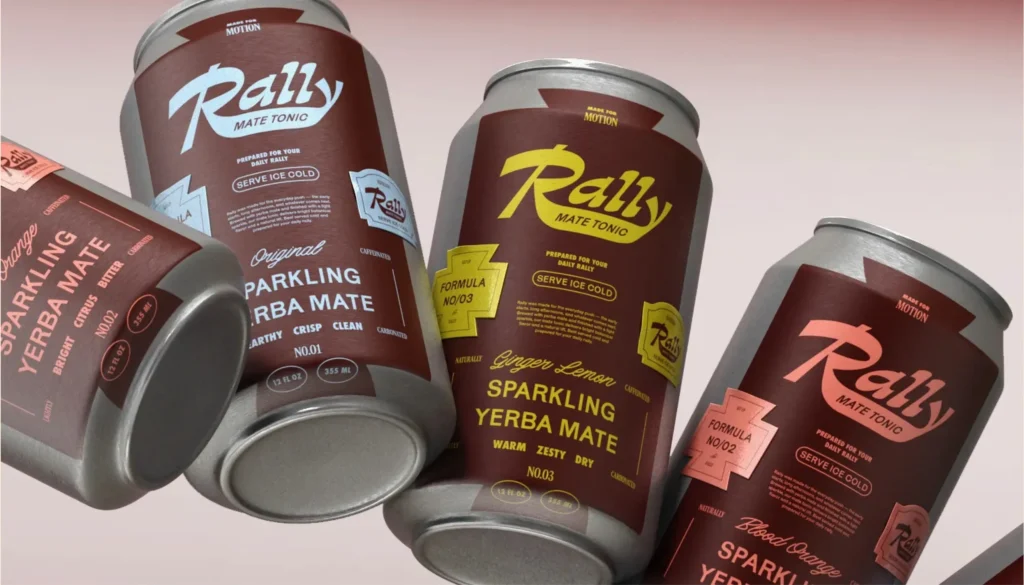
Once the legal block and the codes are in place, the front of the pack still has to work on a shelf next to other brands. Three MarkaWorks food projects show the same decision made in different categories.
For Cey Natural Foods, a natural food brand, the case notes that shoppers on that shelf are checking ingredients before they choose a brand. The typography was set for legibility across formats rather than for display, and visual cues separate product types so someone can move from one format to another without relearning the pack.
For Lif, a fresh juice brand, the labels give the same information in a fixed order, so each product has its own presence inside one shared language, and the typography lets information be scanned quickly on shelf and in digital contexts.
For Planty, a plant-based milk brand, one of the three strategy pillars was an identity that works across flavours, packaging SKUs, retail shelves and future product extensions. Each flavour has its own colour story, so the range reads as one family and each product is still identifiable at a glance.
What the three have in common is a fixed structure with one variable. That is what lets a first retailer take three products now and a fourth later without the shelf looking like four brands.
What to ask the buyer before you print
A retailer can ask for more than the law requires. We have not measured what individual buyers ask for, so the useful step is to ask before the artwork is final. These questions decide things on the pack:
- Do you need a barcode on each unit, on the outer case, or both?
- How many units go in a case, and does the case itself go on the shelf?
- Which pack sizes do you want to list, and is a size change likely in the first year?
- Where on the pack do you expect the date and lot code?
- Do you need product information in a set format, and who fills it in?

The answers change the dieline, the number of barcode numbers you need and the print run. If you are planning that run, which printing method suits how many units explains how quantity changes the method, and how to test packaging before launch covers what you can check on a shelf before committing to it.
Where this fits in a branding brief
Most of the items above are facts about the business: where it is registered, whose name goes on the pack, how the product is coded and how many sizes there will be. They belong in the brief before design starts, because each one takes space on the pack or adds a version of the artwork.
The brief guide, how to write a branding brief when you sell a physical product, has a part for markets and mandatory information and a part for formats and materials. Filling those in with the retailer’s answers saves a round of changes later.
Limits of this article
This article covers the UK rules we opened and read on 27 October 2026. It does not cover Scotland’s registration process, the rules in Northern Ireland beyond the registration timing, allergen labelling, claims made about the product, or any category other than food. It does not list what a specific retailer requires, because that is set by each buyer. For a specific product, check the current law and ask the retailer for their written requirements.
Questions brand owners ask before a first retail order
Do I need to register before selling to a shop?
In the UK, yes. GOV.UK says you must register with your local authority to run a food business, and in England, Wales and Northern Ireland at least 28 days before trading. For Scotland it points to Food Standards Scotland.
Who is responsible for the label if a co-packer makes my product?
Under Article 8 of Regulation 1169/2011, the operator under whose name or business name the food is marketed. If your brand is on the pack, the label is your responsibility, and your name and address are one of the mandatory particulars.
Does every unit need a lot code?
Food that forms part of a lot needs a lot marking indication under the Food (Lot Marking) Regulations 1996. A unit with a best before or use by date showing at least the day and month does not need a separate one, and containers whose largest side is under 10 cm² are exempt.
Do I need a new barcode if I change the pack size?
Yes. Rule 3 of the GS1 GTIN Management Standard says any change to the declared net content printed on the pack requires a new GTIN, so each pack size has its own number.
Does the outer case need its own barcode?
Under the same GS1 rule, a unique GTIN is assigned at every existing level of packaging above the consumer unit. Ask the retailer whether they scan cases, so the case artwork is planned with the unit artwork.
If you are preparing for a first retail order, send us your current pack and the retailer’s questions through our contact page. MarkaWorks packaging and product design work includes the mandatory block, the code areas and the barcode placement as part of the artwork.
Registration, the label under your own name, lot codes, a barcode for each pack size and a range that reads on a shelf.
More brands we brought to life: