What separates your product when other sellers fill the same tin: the name, the packaging system, the business named on the label, the barcode number and the registration.
Yes. A white label product becomes a real brand when 5 things belong to you: the name, the packaging system, the business named on the label, the barcode number and the trade mark registration. The contents may be shared with other sellers. Label rules differ by market, and a UK registration can be revoked after 5 years without genuine use.
What a white label product leaves for you to decide
A white label product is made by one company and sold by others under their own names. The contents and often the container are shared, so 2 sellers can put the same powder in the same tin. If the contents are the same, everything a buyer can tell apart sits on the outside of the pack and in the paperwork behind it.
There are 5 things that belong to you even when the product is shared:
- The name on the front.
- The packaging system: colour, type, layout and the rules that hold them together.
- The line on the label that says which business stands behind the product.
- The barcode number printed on the pack.
- The trade mark registration, where you have one.
We go through them in that order and cite the rule where a rule exists, for the United States, the EU and the United Kingdom. Where a source covers only one market, we say so.
Positioning comes before all 5. If you have not yet decided who the product is for and which alternatives it competes with, start with our guide on how to position a product brand. The brief for the name and the pack is written from that decision.
A name the other sellers cannot share
The name is the first thing the manufacturer’s other customers cannot share with you.
For a white label product, test a name against 4 questions:
- Can it be said and spelled after one hearing?
- Does it still work when the range grows from 1 product to 6?
- Is it distinct from the descriptive words every seller of this product type uses?
- Can it be used in each country on the launch list?
The third question matters most here. Sellers of the same product reach for the same vocabulary, because the product description is the same. A name built from those words blends into the listing page, while a name with its own sound or meaning gives the pack a word that no other seller prints. The fourth question has its own article, choosing a product brand name for several countries, so we keep to the other 3 here.
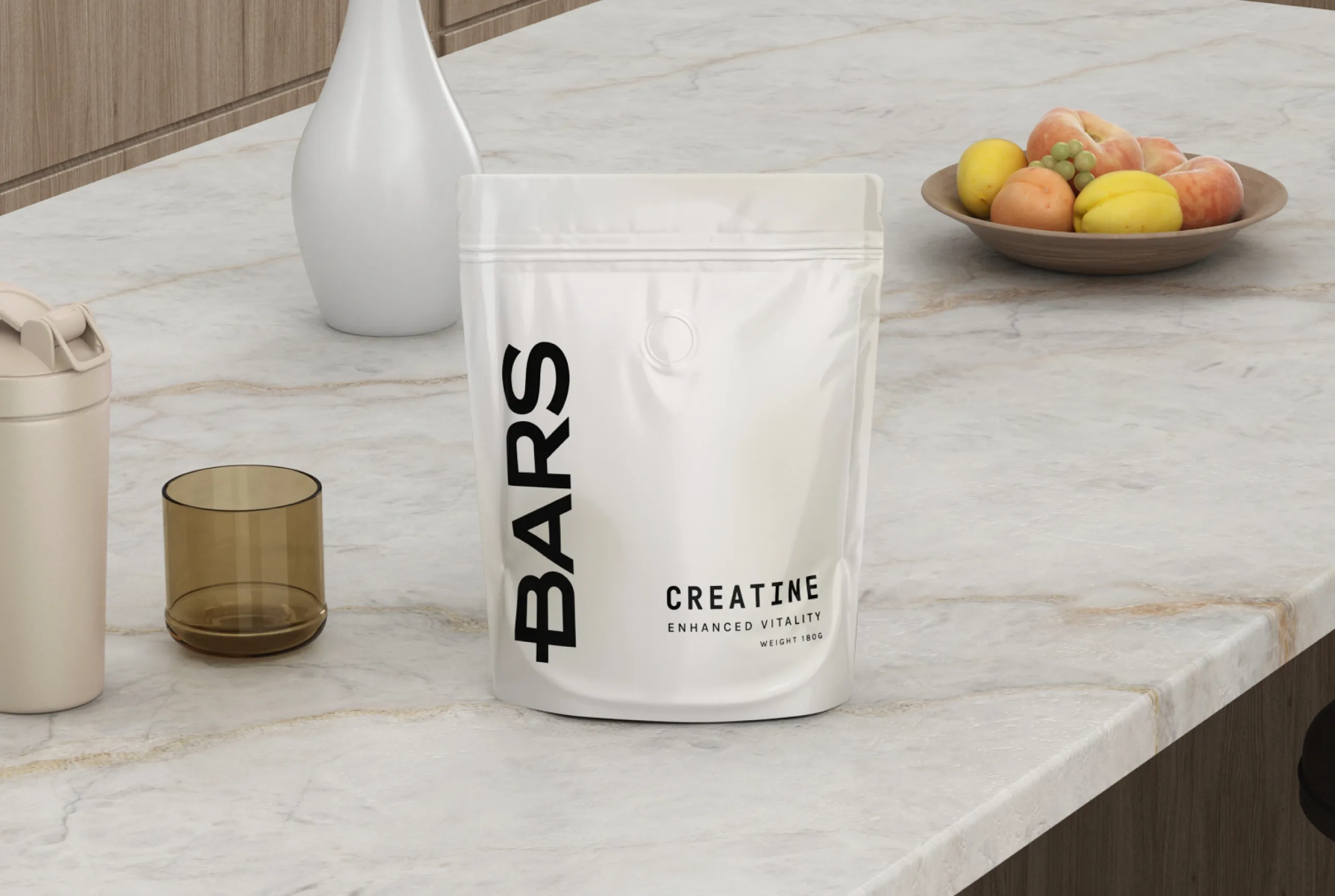
The name then has to carry the pack. In our BARS case study the pouch format was kept minimal so that the wordmark and the product information stand on their own, with no supporting graphics. A pack built this way relies on the name and the typography to be recognised. The pack copy also needs a tone of voice.
A packaging system that belongs to one brand
A white label container is often a stock item, so another seller may fill the same tin or pouch. Your system is the part they do not get: the fixed decisions that make every product in your range look like it came from one company.
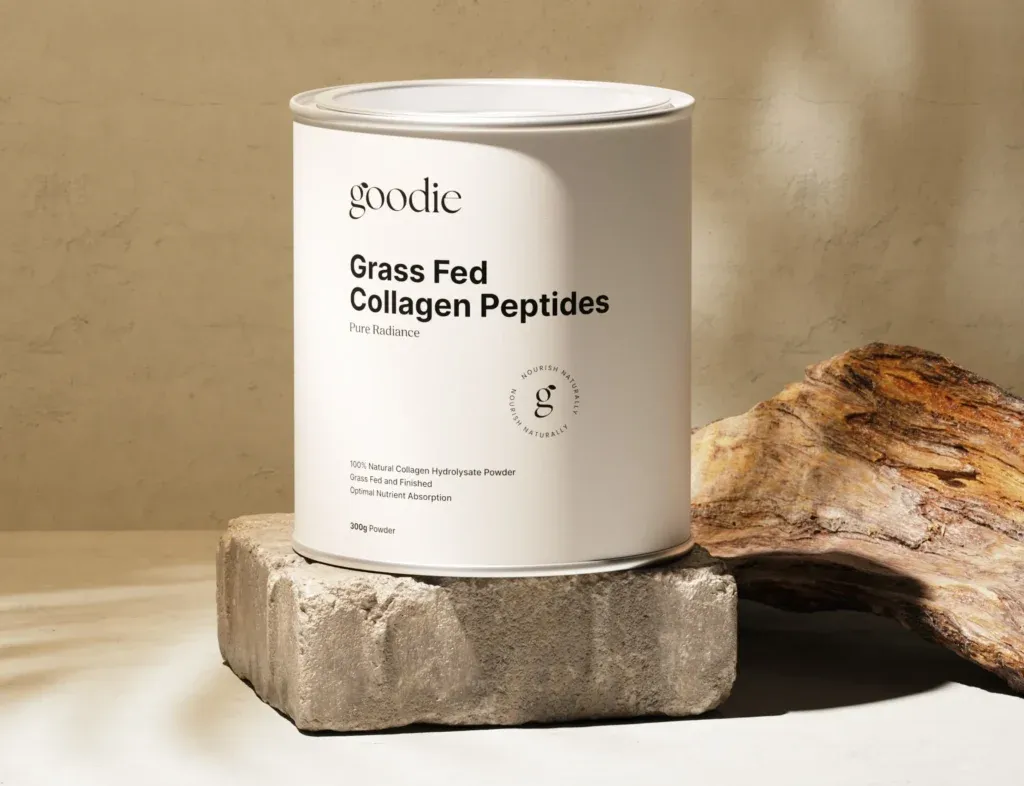
In our packaging work we set the fixed elements first. There are 4: the position of the mark, the type hierarchy, the information block and the panel that faces the shelf. Then we define what changes by variant, such as a colour, a product name or a size statement.
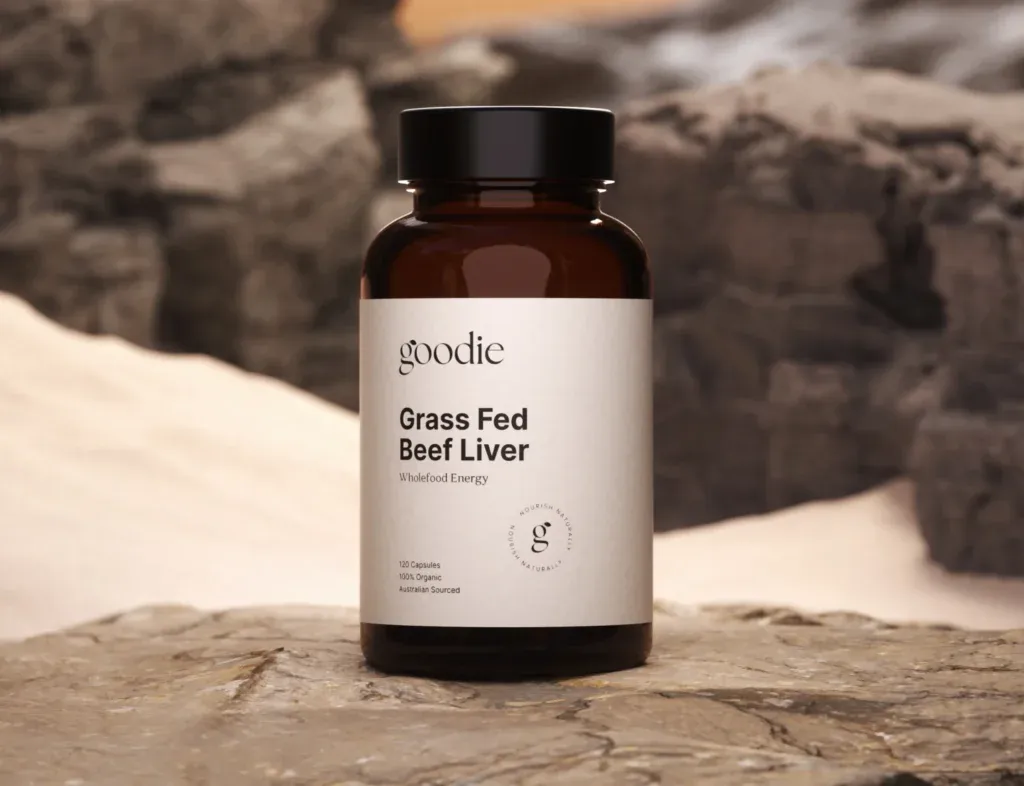
The Goodie project shows the parts. The case study describes a custom wordmark and a monogram built on the letter g that can move across packaging, print and digital communication. Direct sans serif typography carries the product names and the essential information. The palette is drawn from sand, linen, stone and dark wood, and the packaging hierarchy was designed as a flexible system for several product formats.
2 neighbouring questions have their own articles. Whether to stay with the stock container or commission your own, and who is responsible for the packaging in each case, is covered in custom vs stock packaging. How to write the rules so that they still hold at the tenth product is in a packaging system that can grow. See also does packaging design affect sales.
The business named on the label in the United States
A label has to say who stands behind the product, and on a white label product that line needs a decision. In the United States the rule for packaged food is 21 CFR 101.5: “The label of a food in packaged form shall specify conspicuously the name and place of business of the manufacturer, packer, or distributor.” Cosmetics have a parallel rule in 21 CFR 701.12.
Both sections list 3 possible parties, and both deal with the white label case directly. Where the food is not manufactured by the person whose name appears on the label, 101.5 says “the name shall be qualified by a phrase that reveals the connection such person has with such food”. The examples in the regulation are Manufactured for and Distributed by, each followed by a name, or any other wording that expresses the facts.
The same sections contain 2 details that affect the layout:
- For a corporation, the requirement is met only by the actual corporate name, which may be preceded or followed by the name of a division. Your brand name and your corporate name may differ, so check both.
- The place of business includes the street address, city, State and ZIP code.
Your regulatory adviser confirms the wording; we design the layout, and the line gets a fixed place in the information block.
The responsible business in the EU
EU law asks which operator is responsible, and the answer follows the name on the pack.
For food, Article 8 of Regulation (EU) No 1169/2011 says: “The food business operator responsible for the food information shall be the operator under whose name or business name the food is marketed”. If that operator is not established in the Union, the importer into the Union market takes the role. The responsible operator has to ensure the presence and accuracy of the food information. A brand that sells a white label food under its own name therefore answers for what the label says, even when the manufacturer wrote the first draft.
For cosmetics, Article 4 of Regulation (EC) No 1223/2009 allows a product on the market only if a responsible person has been designated. For a product made within the Community, the manufacturer established there is the responsible person and may designate another person by written mandate. For an imported product it is each importer. Paragraph 6 covers the white label case: “The distributor shall be the responsible person where he places a cosmetic product on the market under his name or trademark”.
We read both articles in the text as adopted. Ask your adviser to confirm the current consolidated wording, and the position in Great Britain, which these 2 sources leave out. The table below sets the 4 rules side by side.
| Market and product | Source | Party named or responsible | White label case |
|---|---|---|---|
| United States, packaged food | 21 CFR 101.5 | Name and place of business of the manufacturer, packer or distributor | Name qualified by wording such as Manufactured for or Distributed by |
| United States, cosmetics | 21 CFR 701.12 | Name and place of business of the manufacturer, packer or distributor | Name qualified by wording such as Manufactured for or Distributed by |
| EU, food | Regulation (EU) No 1169/2011, Article 8 | Operator under whose name or business name the food is marketed; the importer if that operator is not established in the Union | The operator marketing the food under its name ensures the presence and accuracy of the food information |
| EU, cosmetics | Regulation (EC) No 1223/2009, Article 4 | Designated responsible person: the manufacturer, the importer or a person mandated in writing | A distributor who places the product on the market under his name or trademark is the responsible person |
The barcode and the number behind it
The number under the bars is a Global Trade Item Number, or GTIN, and on a white label product it is worth asking where that number came from.
GS1 publishes the GTIN Management Standard, which it describes as “designed to help industry make consistent decisions about the unique identification of trade items in open supply chains”. The standard sets out 10 GTIN management rules. Their titles show what kinds of change it deals with: rule 1 is new product introduction, rule 3 is declared net content and rule 6 is primary brand.
For a white label product, settle 3 questions before artwork starts:
- Who obtained the number printed on the pack, you or the manufacturer? Ask what happens to the number if you change supplier.
- Does each variant and each size have its own number? Rule 3 is titled declared net content, so ask before assuming that 2 sizes share one.
- If you rename the product later, what does rule 6 on primary brand require? Read it before the new artwork is approved.
The GS1 overview page lists the rules by title only. The printed symbol is a separate design task, and its limits are in our guide to barcode colours and size. Reserve the barcode area in the information block at the start, so a late change of number changes one element of the layout.
Registration and what keeps it alive
A registered trade mark gives the name on the pack a legal owner. Whether your name can be registered is a question for a trade mark attorney in each market. UK law shows how registration depends on use.
Section 46 of the Trade Marks Act 1994 lists the grounds on which a UK registration may be revoked. The first is that within 5 years of the registration being completed “it has not been put to genuine use in the United Kingdom” by the proprietor or with his consent, for the goods or services it is registered for, with no proper reasons for non-use. The second is that use has been suspended for an uninterrupted period of 5 years. The third concerns anyone naming a product type: that through the acts or inactivity of the proprietor the mark “has become the common name in the trade for a product or service for which it is registered”.
The section also makes 1 point that matters on packaging. Use includes use in a variant form that differs in elements which do not alter the distinctive character of the mark as registered, so keep the registered form and the pack form as close as the print allows.
Section 46 covers the United Kingdom only; for the EU and the United States, check with your adviser. Colour is a separate matter, covered in can you trademark a colour.
Working with MarkaWorks on a white label product
MarkaWorks designs the parts of a white label product that belong to you: the identity and the packaging system. Our category pages list 25 nutrition case studies, 20 in coffee and tea, 17 in food and drink and 15 in cosmetics and skincare.
In our packaging and product design work the structure comes first: the format, the material, the closure and the production method. With a white label product the manufacturer has already fixed some of those, so the first step is to list what is fixed and what is open.
From there the work follows the order of this article:
- The name and the mark, drawn so they hold on the smallest pack in the range.
- The 4 fixed elements of the system, then the elements that change by variant.
- One information block with a set place for the business name and address line and for the barcode.
- Print files drawn on the dieline your manufacturer or printer supplies, handed over with the working files.
Your regulatory adviser confirms the wording of the business name line, and your trade mark attorney handles the registration. We design the layout and the system around both.
If you are about to launch a white label product, you can work with us. Tell us about the product, the manufacturer’s pack format and the markets you plan to sell in, and we will show you how we would build the name, the label and the system.
Questions founders ask about white label brands
Whose name goes on a white label product in the United States?
21 CFR 101.5 for food and 21 CFR 701.12 for cosmetics ask for the name and place of business of the manufacturer, packer or distributor. Where the named business did not make the product, the name is qualified by wording such as Manufactured for or Distributed by. Your regulatory adviser confirms which party your label names.
Who is responsible for a white label cosmetic sold in the EU under my brand?
Under Article 4(6) of Regulation (EC) No 1223/2009, a distributor is the responsible person where he places a cosmetic product on the market under his name or trademark. The responsible person ensures compliance with the relevant obligations in the regulation for each product placed on the market.
Can 2 brands sell the same white label product under different names?
Yes. The contents are shared and each seller applies its own name and pack. What separates the 2 on a shelf or a product page is the name, the packaging system and the business named on the label, so those 3 are designed first.
Can a UK trade mark be lost if the brand stops using it?
Yes. Section 46 of the Trade Marks Act 1994 allows a registration to be revoked if the mark has not been put to genuine use in the United Kingdom within 5 years of registration, or if use has been suspended for an uninterrupted period of 5 years, without proper reasons for non-use.
More brands we brought to life: