Updated November 2026
Brand Guidelines
Brand guidelines are written for the people who apply an identity after we hand it over: printers, developers, sign makers and the next agency. They are part of the MarkaWorks brand strategy work, and guideline pages appear on 33 of the 35 case pages we published from November 2025 to November 2026.
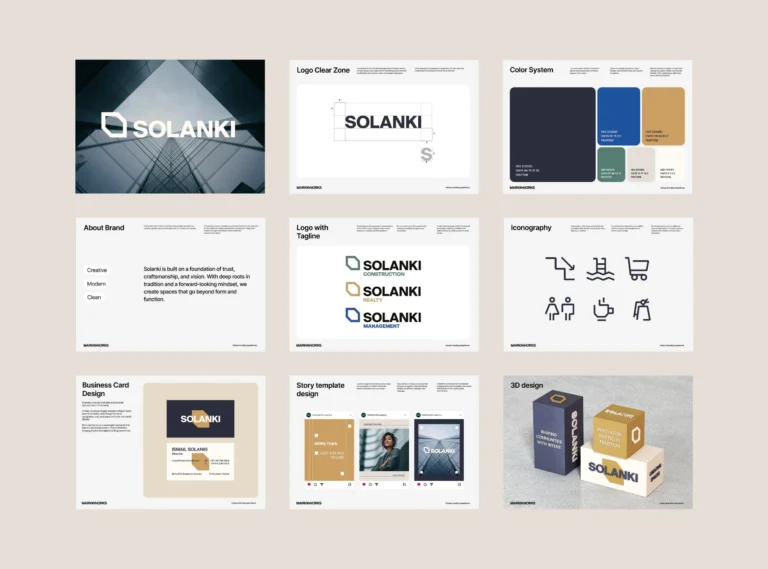
We write them as rules that can be checked: clear space in a stated unit, color values for each medium with the contrast ratios recorded, and a type scale with sizes. Solanki shows why. A development brand is applied by contractors, signage fabricators and agents rather than by designers, so its system had to hold in hands that never see the original files. Not every brand needs the full document, and a lighter brand style guide shows the visual style without the full rule set.
Inside the guideline pages
- The logo, its clear zone and lockups
- Color values for print and screen
- Typography, icons and patterns
- Packaging and print applications
What the guideline pages cover
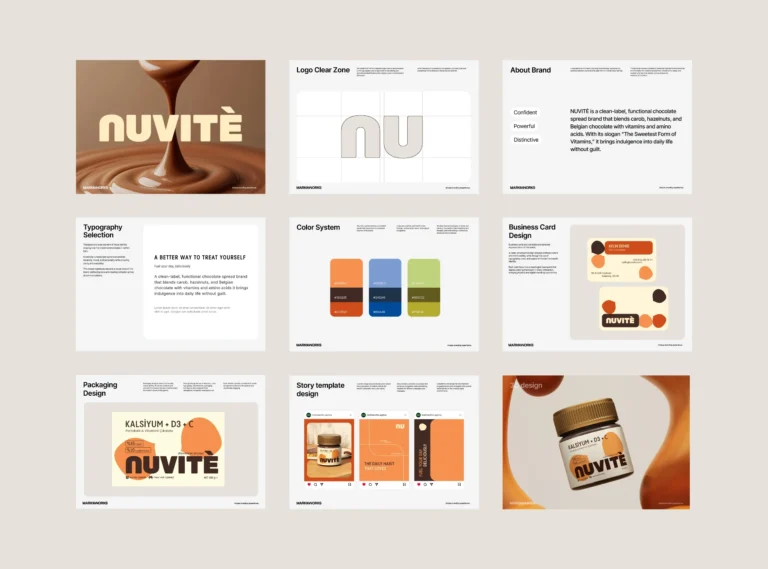
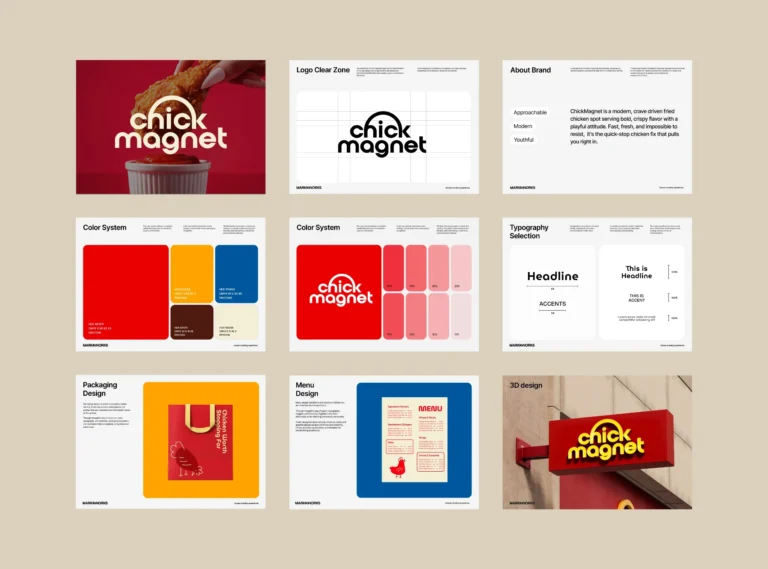
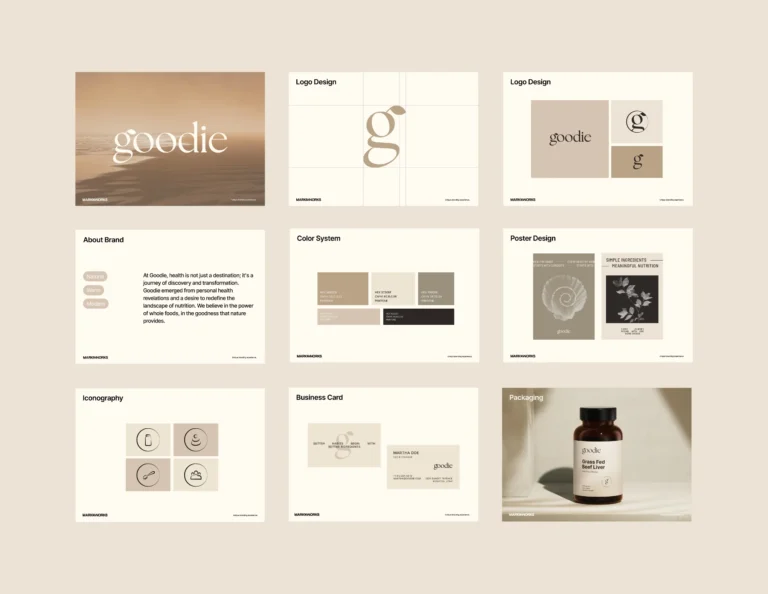
Each row below is read from the nine-panel guideline image on that brand’s case page. Every set carries three character words on its About Brand page and a color page of its own, so the first two columns compare the seven brands on the same terms. The last column names what each set was applied to, such as the menu and takeaway bag for Chick Magnet and the division lockups for Solanki.
| Brand | Character words | Color system | Where the set is applied |
|---|---|---|---|
| Solanki | CreativeModernClean | Six colors on the color page | Tagline lockups for its construction, realty and management arms |
| Nuvite | ConfidentPowerfulDistinctive | Nine colors on the color page | The jar label, a business card and story templates |
| Vivvira | CleanModernMinimal | Six colors on the color page | A frosted jar and a business card |
| Chick Magnet | ApproachableModernYouthful | Five colors on the color page | The menu, a takeaway bag and the shop sign |
| Goodie | NaturalWarmModern | Five colors on the color page | Two posters, a business card and the bottle label |
| Holme | ElegantCleanDistinguish | Six colors on the color page | An envelope, story templates and a candle jar |
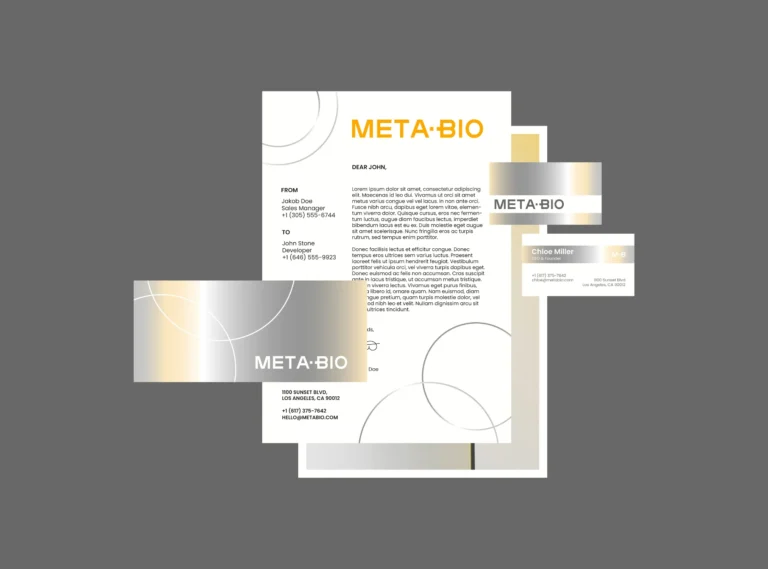
| Meta Bio | UniqueAssertiveMinimal | Six colors on the color page | A silver and cream envelope, business card and story templates |

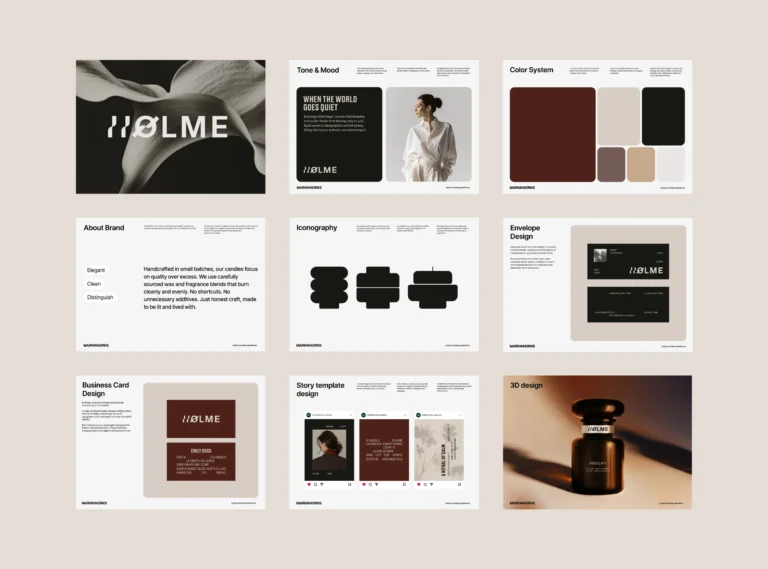

Character words are quoted as each brand wrote them. Colors are sampled from the color page of each guideline image, so a printed swatch can differ slightly. Open a row to see the full set on the case page.
Written for the hands that apply it

Solanki shows why the document matters. A development brand is applied by contractors, signage fabricators and agents rather than by designers, so the system had to be documented tightly enough to survive hands that never see the original files.
That constraint shaped the design as much as the look did. Simple geometry and clear spacing rules are also the parts that get built correctly, and the delivered scope lists brand guidelines by name, next to strategy, identity, art direction, environmental design and digital experience.
Rules written as numbers
A rule that only states an intention cannot be checked. We write guidelines as checkable rules: clear space in a stated unit, color values for each medium with the contrast ratios recorded, and a type scale with sizes.
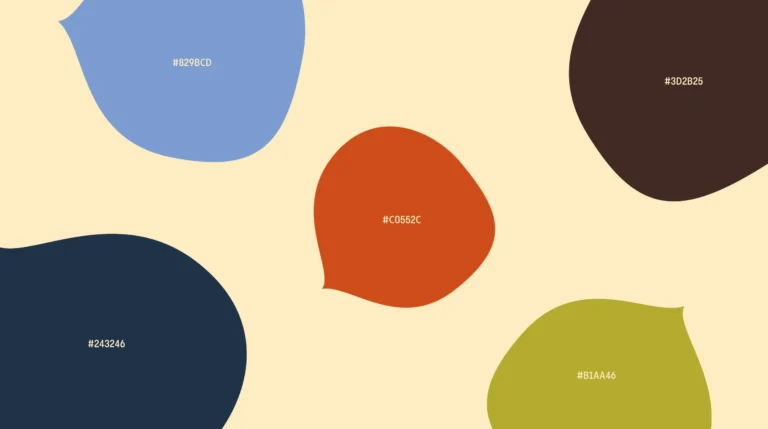
On the Nuvite case page each color of the palette carries its hex code, and Vivvira pairs each palette bar with its blue values. Screen and print reproduce color differently, so we record the values for each process, and the next supplier inherits numbers rather than opinions.
One set of rules for every surface
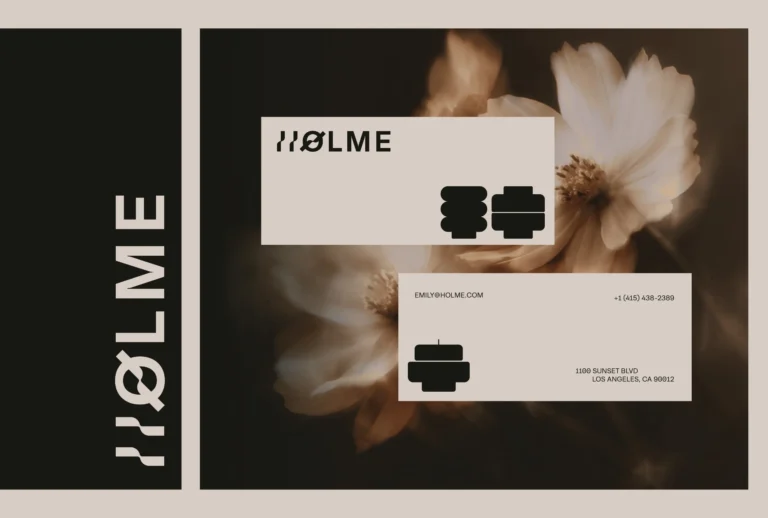
Guidelines also decide whether a brand looks like itself in places the designer never sees. For Holme, color, typography and form were resolved together rather than in sequence, so the same rules hold for an object photographed for a catalogue, the same object on a product page and the same object in brand communication.
Photography is usually the first thing to drift when a system is applied by different hands, because it has the fewest hard rules. In the Vivvira system it is tied to the same soft blue temperature and the same generous spacing as everything else, so it stays inside the system when the subject changes.
Full guidelines or a lighter style guide
Not every brand needs the full document. A brand style guide shows the visual style without the full rule set, and we hand it over as a deliverable in its own right. The practical test is how many people will apply the brand without speaking to you.
We agree at the start which of the two documents is being bought and write it into the proposal. The lighter guide can grow into the full document later without redrawing anything, because both carry the same process values. Our article on what should be inside a brand guidelines document lists the contents section by section.
Guidelines you already have
When a brand already holds guidelines, a rebrand updates them rather than starting a second document. When the packs on the shelf disagree with the guidelines, we start with a side-by-side comparison of one printed pack and the guidelines page, and rewrite the rules at pack scale before touching artwork. Our guide to packaging that does not match the brand walks through that comparison.


Frequently asked questions
In our projects the guidelines carry the logo and its clear zone, color values for each medium, typography, icons and patterns, tone where the project defines it, and the brand's own applications, such as packaging, menus or stationery. The seven sets on this page show which of these each brand needed.
Page count is not the measure. The document is long enough when someone who never met the brand team can apply the identity correctly, and every rule in it can be checked against a number.
Full guidelines carry the rule set, the exceptions and the production detail. A style guide shows the visual style without the full rule set. Both are deliverables we hand over, and the proposal names which one you are buying.
When the project defines a voice, yes. The Holme and Meta Bio guideline sets both include tone pages. Our brand voice and messaging page covers how that part is written.
The agreement decides, so we write it into the scope before the work begins, together with which document you are buying and who may update it when a rule turns out to be wrong in use. Our guide to who owns logo and design files covers the rest.


A first call about your brand
Tell us in a first call where the brand stands today, or ask for a written proposal; either way we come back with a suggested scope.
Talk to an expert now