Reposition a brand for a higher price point by listing what current customers already recognise and keeping it, then changing the system around those cues and adding visible evidence for the new price. Run it as an evolution in 3 steps: keep the recognition cues, raise the proof, then change the price, so existing buyers still find the product they know.
Start with what current customers recognise
An upmarket move has 2 audiences at once: the buyers the brand wants to reach at the higher price, and the buyers who already know it. A repositioning goes wrong when it is designed only for the first group, so that the second group no longer finds the product they bought last month.
Our brand strategy and visual identity page names the risk directly: “A rebrand is the one project where the risk is subtraction.” It continues: “The brand already has recognition, search traffic and shelf memory, and a redesign that ignores those throws away an asset nobody has priced.”
The first task is therefore an inventory, written before any design. The same page describes how we start: “Our rebrand work starts by listing what must survive: the elements a buyer uses to find the product, the pages that already earn visits, the names people search.” For a product brand, that list usually covers the name and wordmark, 1 or 2 colours that identify the range, the pack shape, and the way a buyer tells 1 variant from another.
Everything on the list stays recognisable. Everything outside it is open to change, and that is where the new price point is built.
Check that the brand has a reason to move upmarket
A higher price point needs a reason the buyer can see. Our article on rebranding after a seed round lists the situations in which a rebrand earns its place, and 1 of them is this one: “You are entering new markets, launching a new category, or moving upmarket.”
The same article sets the condition that comes first: “If the business strategy is still changing every month, solve that first. Design cannot manufacture clarity that leadership has not decided.” For an upmarket move, the decision to settle is what has actually changed in the product or the offer. A better ingredient, a new format, a more considered sourcing story or a broader range are reasons. A new look on the same product is a price rise with a design attached.
Write the reason in 1 sentence before the brief goes out. If the sentence names something the buyer can check on the pack or the product page, the repositioning has something to stand on. If it names only a feeling, the work should start with the product or the offer, not with the identity. Our guide to positioning a product brand sets out the 4 decisions that turn that sentence into a position.
Raise the evidence before the price
If the new position brings new claims, those claims have rules. In the UK, the CAP Code section 3 on misleading advertising applies to the pack copy, the product page and the campaign that announce the move.
Its comparisons principle covers the language that upmarket moves reach for: “Superiority claims must be supported by evidence unless they are obvious puffery (that is, claims that consumers are unlikely to take literally). Objective superiority claims must make clear the aspect of the product or the marketer’s performance that is claimed to be superior.” Rule 3.7 sets the timing: marketers “must hold documentary evidence to prove claims that consumers are likely to regard as objective and that are capable of objective substantiation” before publication.
Rule 3.11 adds a limit that matters when a brand is trying to look more capable than before: “Marketing communications must not mislead consumers by exaggerating the capability or performance of a product.”
In practice, list every claim the new position will make and sort it. Objective claims (a material, an origin, a process, a test) get their evidence on file first. A stance or a tone does not depend on a measurement. Visible evidence on the pack, such as an origin stated in a fixed place or a material named on the label, often does more for a higher price than an adjective, and it is easier to defend.
Keep the recognition cues and change the system around them
The design work in an upmarket move is mostly about what surrounds the cues that stay. The wordmark can keep its shape while the type around it, the colour build, the layout and the materials change.
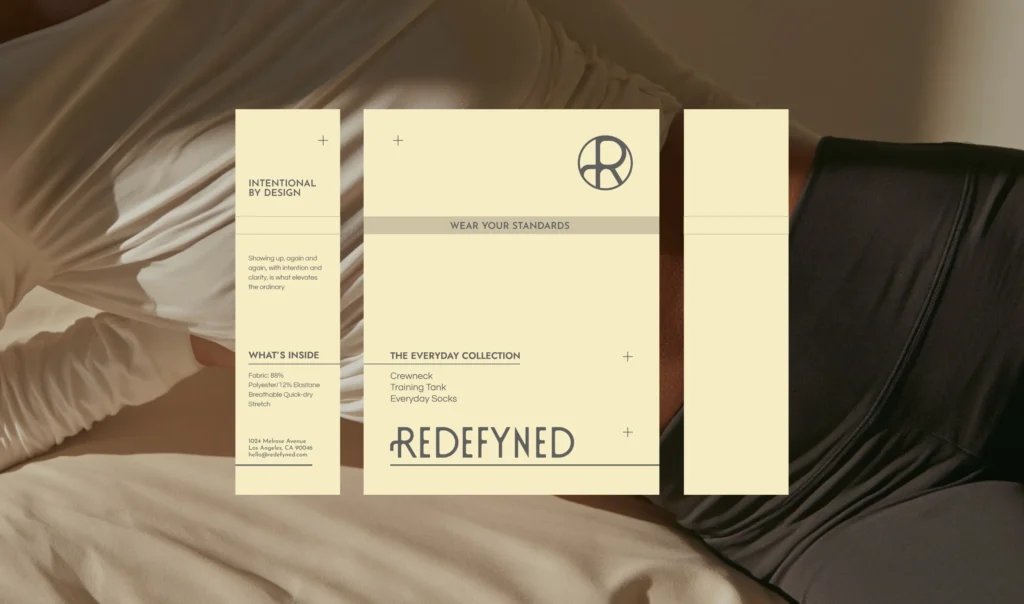
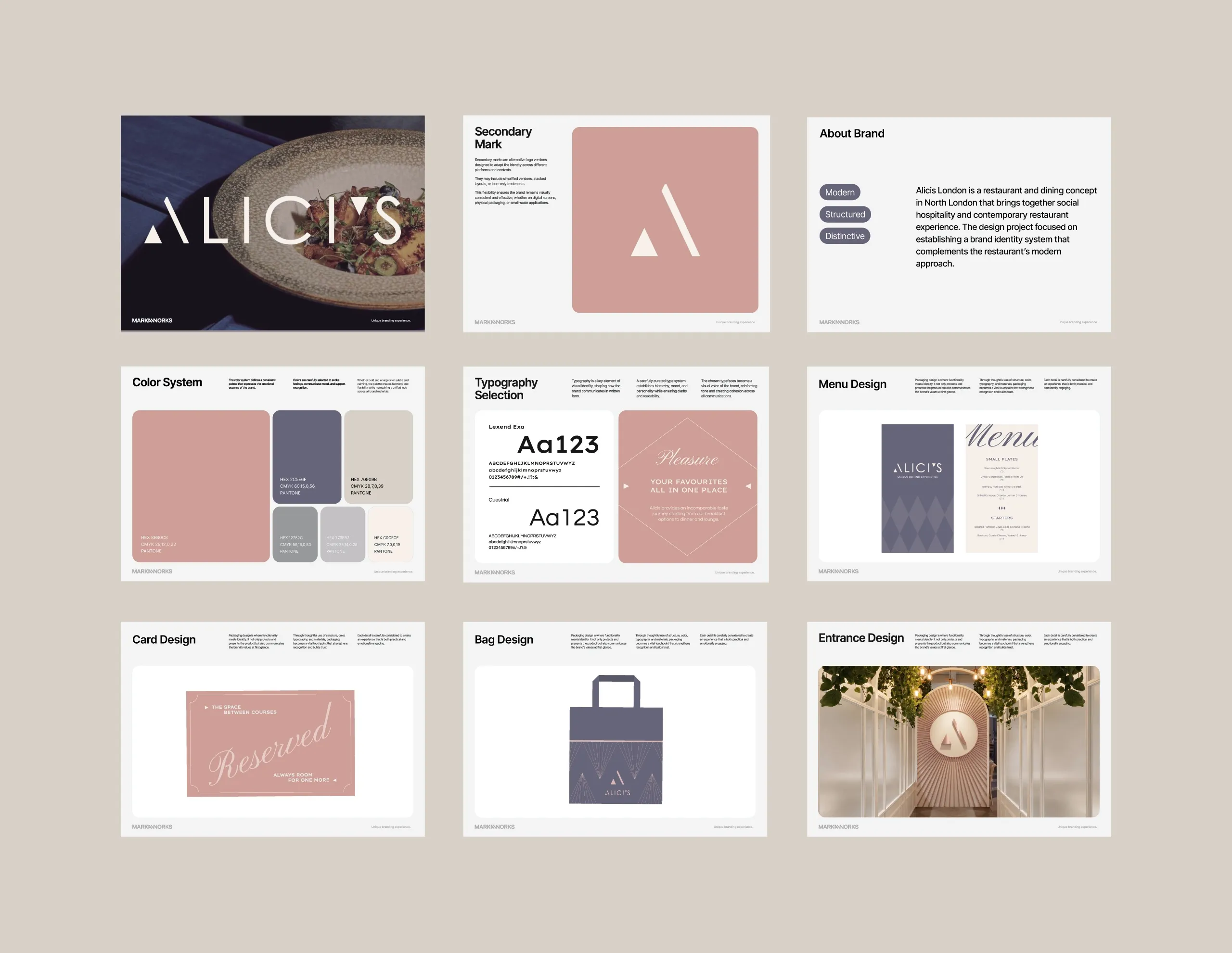
Alici’s is a London restaurant and lounge brand whose identity we first built in 2022 and returned to in 2026. The case study describes the brief: “The challenge was therefore not to replace it, but to strengthen it.” The approach followed from that: “Rather than approaching the project as a rebrand, we treated it as an evolution. The existing wordmark and core geometric language were retained, while typography, colour, supporting graphics and applications were expanded into a more expressive system.” The aim was a “more mature dining and lounge experience”, and the outcome is described as “a more mature and flexible identity without losing the recognition built since its original launch.”
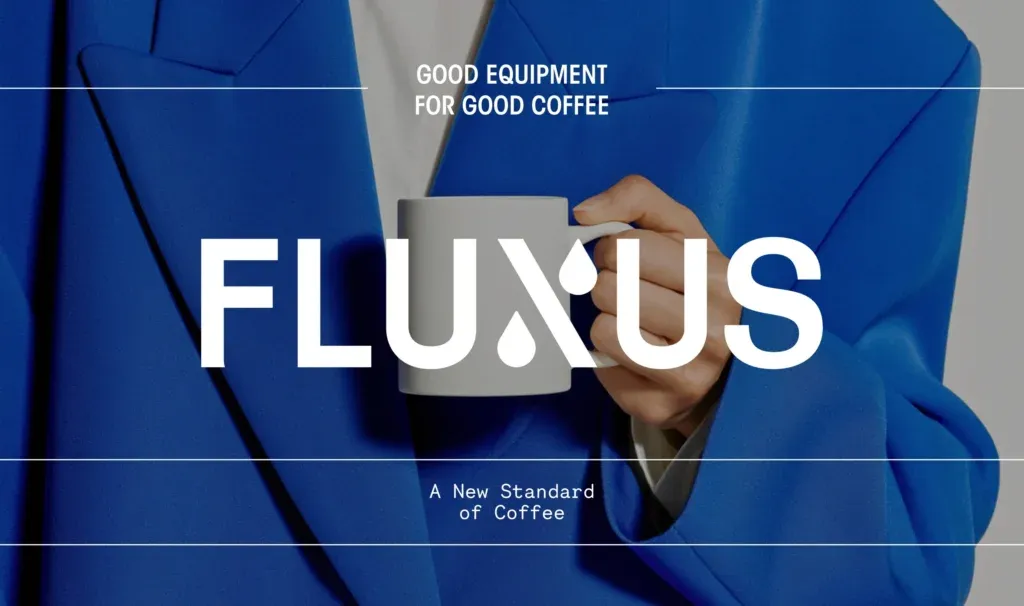
Fluxus Coffee shows the same method on a product range. The identity we built in 2020 had to carry a larger range, and the case study records the choice: “We chose to return to the original identity and refine it rather than replace it. Everything that was still doing its job stayed.” Its conclusion is the test for any repositioning: “The brand is still recognizable to the people who already knew it, and the system underneath it is flexible enough to keep growing without being redrawn.”
Pack changes that need planning, including the barcode
A repositioning can change more than the graphics, and some of those changes have consequences in the supply chain. The GS1 GTIN Management Standard sets out when a product needs a new GTIN, the number behind the barcode.
Its rule on the primary brand defines it as “the brand most recognisable by the consumer, as determined by the brand owner, and can be expressed as a logo and/or words.” The rule states: “A change to the primary brand that appears on the trade item, requires assignment of a new GTIN.” A move that renames the product therefore reaches the barcode and every retailer listing built on it.
2 other rules can apply to an upmarket move. The declared net content rule says: “Any change (increase or decrease) to the legally-required declared net content that is printed on the pack, requires assignment of a new GTIN.” The price on pack rule says: “Any addition, change or removal of a price marked directly on the product package (not recommended), requires assignment of a new GTIN.”
These rules are 1 more reason to keep the primary brand where it is and change the system around it. Our article on rebranding without wasting printed packaging covers the stock and print side of the same transition.
| Element | Usual decision in an upmarket move | What to check first |
|---|---|---|
| Name and wordmark | Keep, refine if needed | A primary brand change needs a new GTIN |
| Range colours | Keep the cue, rebuild the palette around it | Buyers can still tell variants apart |
| Type, layout, materials | Change | The system reads as the new price point next to the new comparison set |
| Claims | Add only what can be shown | Evidence on file for every objective claim |
| Contents or net content | Change only with a reason | New GTIN if declared net content changes; tell customers |
| Pages that earn visits | Keep addresses and titles | Traffic before and after can be compared |
Tell current customers what changed
Buyers who already know the product will notice a new pack and a new price at the same time. The safest moment to explain is the first time they see both.
The CAP Code’s rule 3.3 sets the floor for that explanation: marketing communications “must not omit material information or information required to be included by law.” If the repositioning changes the contents, the format or the formulation, say so plainly on the pack and the product page, rather than letting the new design imply that nothing else moved.
If the change is mainly in the identity and the offer, tell customers what is the same as well as what is new. A short line on the product page, the first email after launch, and the retailer listing can all carry the same 2 or 3 sentences: what changed, why, and what has stayed. The recognition cues on the pack do the rest, because a buyer who sees the familiar name and colour knows they are looking at the product they chose before.
Keep the old and new packs side by side in your own photography during the change, so that search results, marketplace images and retailer pages do not show 2 brands at once for longer than necessary.
Measure whether current customers stayed
A repositioning should be measured on both audiences, and the measures should be chosen before launch. For the buyers the brand is trying to reach, the usual signals are where the product is listed, who it is compared with, and how new customers describe it. For current customers, the signal is whether they keep buying.
Our guide to measuring whether a rebrand worked sets out how to compare before and after without reading a seasonal change as a design result. For an upmarket move, 3 comparisons do most of the work: repeat purchase among existing customers, the search terms people use to find the product, and the pages that earned visits before the change.
That last check links back to the inventory at the start. Our brand strategy page states the rule we follow: “This is also why we do not change a brand’s addresses or page titles as a side effect of a design decision.” If the pages that already earn visits keep their addresses, any change in traffic can be read as a response to the repositioning rather than as a side effect of a site move.
How MarkaWorks handles an upmarket repositioning
MarkaWorks is a branding agency for product brands, and an upmarket repositioning runs through the same stages as our identity work, with 1 addition at the start: the inventory of what must survive.
The order is the one set out above. First the reason for the move, in 1 sentence. Then the claims list with its evidence. Then the identity system, built around the cues current customers recognise. Then the pack changes, planned with the barcode and stock in view. Our service page answers the question directly: “Can you rebrand without losing our existing search traffic? Yes, and it is planned rather than hoped.”
When you are comparing agencies for this kind of project, ask each one how it decides what stays; our guide to comparing branding proposals beyond the price shows where that answer should appear in a proposal. To talk through your current customers, your new price point and what has to survive, start from our contact page.
Questions brand owners ask about moving to a higher price point
Do we need a full rebrand to move upmarket?
Not necessarily. An upmarket move can work as an evolution: the name, wordmark and range cues stay, while type, colour build, layout and materials change around them.
What should stay the same for current customers?
The elements a buyer uses to find the product: the name and wordmark, the colours that identify the range, the pack shape and the way variants are told apart.
Do premium claims need evidence?
Objective ones do. The UK CAP Code requires documentary evidence for objective claims before publication, and superiority claims need evidence unless they are obvious puffery.
Does a new pack design need a new barcode?
Not always. Under the GS1 GTIN rules, a change to the primary brand, the declared net content or a price printed on the pack requires a new GTIN.
How do we know whether current customers stayed?
Choose the measures before launch: repeat purchase among existing customers, the search terms people use to find the product, and visits to the pages that earned them before.
List what current customers recognise, raise the evidence before the price, change the system around the cues that stay, and know which pack changes need a new barcode.
More brands we brought to life: