A brand stays consistent through new products when 4 decisions are made before the first extension: where the new product sits in the brand, how it is named, which elements stay fixed on every pack and product page, and which identifiers it needs. GS1 rules say any new product needs its own GTIN, so a new flavour gets a new barcode.
Where the new product sits in the brand
Every new product answers one question before anyone opens a design file: is it a new version of something the brand already sells, a new line under the same name, or something different enough to carry a name of its own? The answer sets how much of the existing system the product inherits, and it is cheaper to decide on paper than on the shelf.
A new size or a new flavour of an existing product is the simplest case. It takes the whole system and changes 1 or 2 elements, usually the flavour name and a colour. A new line, such as a second format or a second use, keeps the brand mark and the type but may need its own colour range and its own information order. A product that serves a different buyer is where the question of a separate name comes up, and we cover that decision, with the costs of opening a second brand, in our guide to choosing one brand or a family of brands.
Most consistency problems start when this step is skipped. A team adds a product because it is ready, gives it a name the founder likes and a pack in a colour nobody else is using, and only notices at the third or fourth product that the range no longer reads as one brand. The fix at that point is a redesign of products that were already on sale.
A naming rule written before the first extension
A naming rule is a short written instruction that tells the team how every future product will be named. It covers the order of the parts (brand, line, variant, size), which words are fixed and which change, and the words the brand will never use. With the rule in place, the fifth product is named in a minute and sits next to the first without looking like a different company made it.
The rule also has to work outside the home market. For YU, a Japanese tea brand we named and designed, the name was “chosen to stay short, memorable, and pronounceable across languages”. The same test applies to variant names: a flavour or a line name that a buyer cannot say aloud is harder to ask for, search for and remember.
Write the rule down with 3 or 4 worked examples, including one product the brand has not made yet. If the team cannot name an imaginary product from the rule alone, the rule is not finished.
The elements that stay fixed and the ones that change
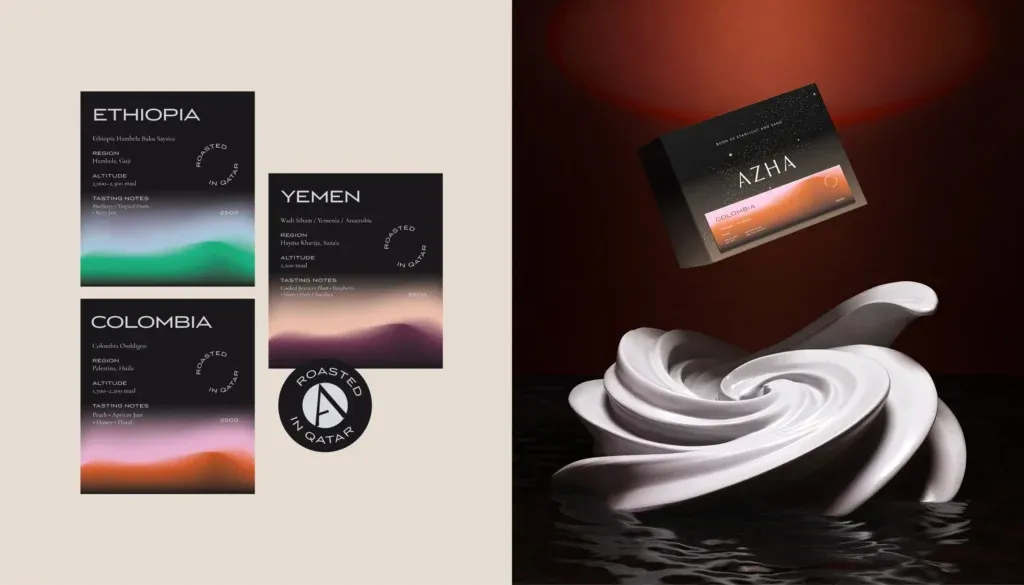
Our packaging page puts the problem in one sentence: “Most packaging work fails at the second product.” A single pack can be designed on instinct. A range needs a rule that tells anyone which element changes per variant and which never moves, and that rule has to exist before the second product is designed.
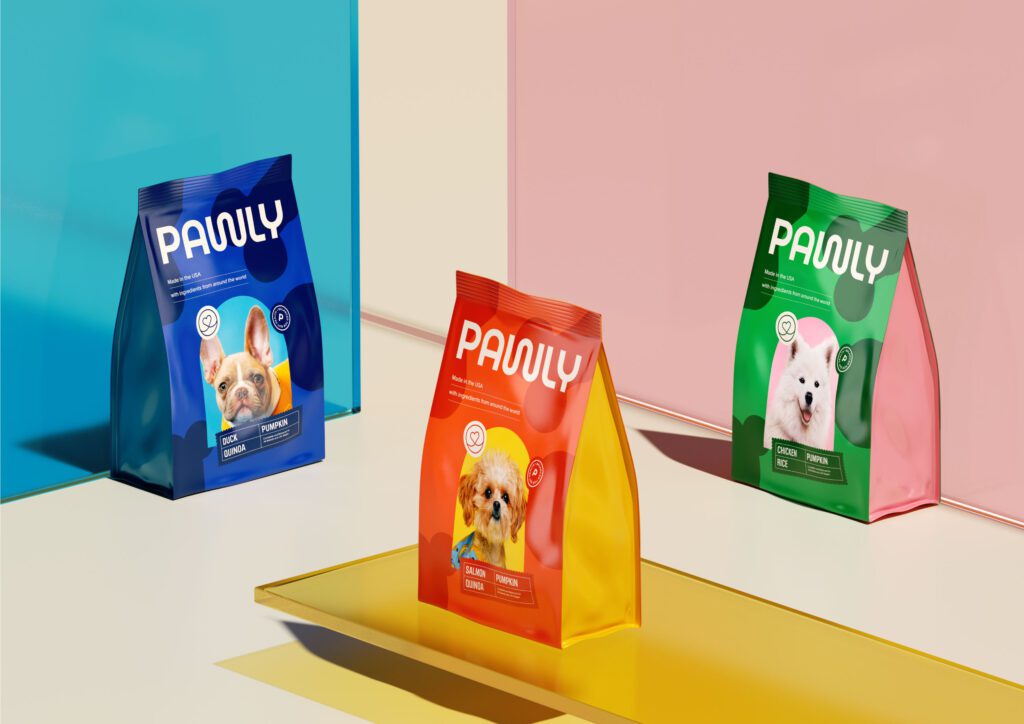
The fixed elements are usually the mark position, the type hierarchy, the information block and the panel that faces the shelf. The elements allowed to change are fewer than most teams expect: the variant name, a colour or colour family, sometimes an illustration or a photograph. When those 2 lists are written down, a new product is a matter of filling in the changing parts, and “adding a product later then needs no redesign, and the shelf still reads as one family.” The full method, with the information block and the barcode rules, is in our article on a packaging system that grows.
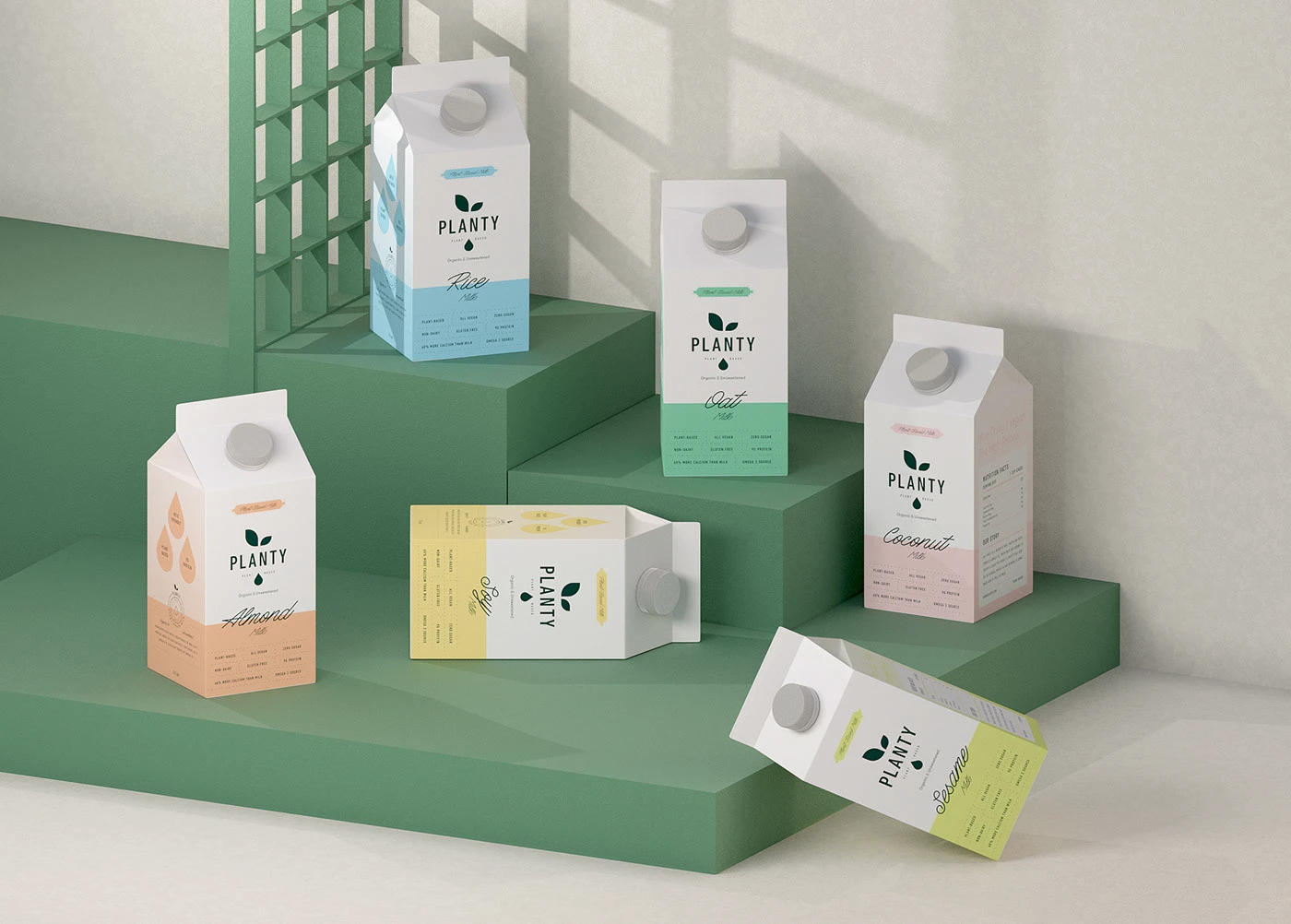
Colour does most of the work in a range. For YU, “two accents separate the range: a bright green for Matcha and a burnt orange for Hojicha”, on a shared base of beige, amber and brown. For Planty, a plant-based milk brand, the brief asked for “a flexible identity that works across flavors, packaging SKUs, retail shelves, digital presence, and future product extensions.” If the range will grow by flavour, the colour system needs room for flavours that do not exist yet, and our guide to packaging design for multiple flavours shows how to plan the codes.
Identifiers every new product needs
Consistency has a part that buyers never see. Retailers, marketplaces and warehouses tell products apart by their identifiers, and a new product that borrows an old barcode causes the wrong item to be shelved, shipped or reordered.
The GS1 GTIN Management Standard states it plainly: “Any new product requires the assignment of a GTIN”. Its examples include a product line that adds a flavour that does not exist in the brand owner’s portfolio, and a T-shirt line where each style, colour and size “is considered a unique product and is assigned a unique GTIN.” The GTIN is assigned at the retail unit, and every level of packaging above it, such as a case or an outer box, gets its own GTIN as well.
Plan the identifiers with the range, not after the artwork is finished. The barcode position belongs in the fixed information block, so every new pack has the same space for it, and the product data (name, size, GTIN) should be written in the same order the pack shows it. A team that keeps a single sheet with every product, its name, its size and its GTIN can add the next product without asking where the last one put the barcode.
| New product type | Name | Pack design | Product page | Barcode (GTIN) |
|---|---|---|---|---|
| New size of an existing product | Same name, new size | Same layout, new net content | Usually a variant on the existing page | New GTIN for the item and its case |
| New flavour or colour | Same line, new variant name | Same layout, new colour inside the system | Usually a variant on the existing page | New GTIN |
| New line under the brand | Line name from the naming rule | Fixed elements kept, own colour range possible | Usually its own page, same structure | New GTIN for every item |
| Product for a different buyer | Decided case by case | Decided with the brand architecture | Its own page or its own site | New GTIN for every item |
The product page side of a new product
A new product reaches most buyers through a product page before it reaches a shelf, so the online store needs the same rule as the pack. In a Shopify store, the platform’s variants guide explains that “each combination of option values for a product can be a variant”, so a new size or flavour can live on the existing product page as a variant, while a new line usually needs a page of its own. Shopify also notes that Plus stores can combine individual products into one listing that “can have up to 3 options in addition to the options in each product included in the listing”.
The choice between a variant and a new page is a brand decision as much as a technical one. A variant keeps the product next to its siblings and shares their reviews and copy. A new page gives the product its own name and its own story, and it needs to be built from the same page structure so it does not look like a different shop.
For MUUM, a baby-care brand whose website we designed, we built a modular UI system with a component library and fixed colour and spacing rules, because “that system is what lets the brand add products later without the interface drifting away from the identity it started with.” Our guides to what a Shopify website needs before launch and to carrying packaging design into Shopify cover the page side in more detail.
A check to run before each new product launches
Before a new product goes to print or goes live, run the same short check every time. It takes less than an hour and it catches most of the drift that would otherwise reach the shelf.
- Does the name follow the naming rule, and could a new team member have produced it from the rule alone?
- Does the pack change only the elements on the list of elements allowed to change?
- Is the new colour inside the colour system, and is it far enough from its neighbours to be told apart on a shelf and on a phone screen?
- Does the product have its own GTIN, and does its case or outer box have one too?
- Is the product page built from the existing page structure, with the same order of information as the pack?
- Are the claims on the page the claims printed on the label?
Put the new pack next to 2 or 3 existing ones, on a real shelf or in a mock-up, and look at the group from 2 metres away. If the new product is the first thing the eye lands on for the wrong reason, the colour or the layout has left the system.
How MarkaWorks handles new products in a range
MarkaWorks is a branding agency for product brands, and naming, identity, packaging and the website are separate skills held by separate people on one team. Our brand strategy page explains that identity rules “let a brand grow without calling a designer for every asset”, and our packaging page says that “the product roadmap matters most, because it decides the range rules.” When we know which products are planned, the range rules are written for them before the first pack is drawn.
When we design both the pack and the site, “the pack and the product page carry the same claims and the same color”, which is harder to keep when 2 suppliers work apart. For brands that add products through the year, the same system can be kept current in an ongoing design partnership, month to month.
Recent range work is on our YU, Planty and Nutrio case pages. To plan a new product or a range, see our brand strategy and visual identity service or start from our contact page.
Questions brand owners ask about adding new products
Does every new flavour need a new barcode?
Yes, under the GS1 GTIN Management Standard. Its rule for new products gives a new flavour in a product line as an example of a change that requires a new GTIN, and each level of packaging above the retail unit gets its own GTIN as well.
Should a new product get its own name?
Only when it serves a different buyer or a different use from the rest of the range. A new size or flavour normally keeps the line name and changes the variant name, following the naming rule the brand wrote before the first extension.
How many elements should change between products in a range?
As few as the shopper needs to tell the products apart, usually the variant name and a colour, sometimes an illustration. The mark position, type hierarchy, information block and front panel stay the same on every product.
Should a new flavour be a variant or a separate product page in Shopify?
A new size or flavour usually works as a variant, since Shopify counts each combination of option values as a variant of one product. A new line with its own story usually needs its own page, built from the same page structure.
When should the range rules be written?
Before the second product is designed, and ideally before the first, using the product roadmap. Rules written after several products are already on sale usually mean redesigning some of them.
Where a new product sits in the brand, the naming rule to write first, what stays fixed on the pack and the product page, and the identifiers every new item needs before launch.
More brands we brought to life: