A branding brief for a physical product has two halves. One sets out the business problem: who buys, where the product sells and what is not working. The other records the product as it will be made: formats, materials, markets, mandatory label information and the trade mark status of the name. The 8 parts below cover both.
What a branding brief is for
A brief is the document an agency designs against. It turns what you know about your business into a problem the design work can answer, and it records the facts the design cannot change.
The UK Design Council describes the design process as a Double Diamond with four stages: discover, define, develop and deliver. Its description of the first stage is a useful test for any brief: it “helps people understand, rather than simply assume, what the problem is.” The brief is where your understanding is written down, so the agency starts from it instead of from assumptions.
A brand that sells a physical product needs more in the brief than a service business does. The product has a size, a material and a label, it is printed by a supplier and sold in a market with its own rules. Each of those is a fixed condition for the design, and each one is cheaper to state at the start than to discover halfway through.
The 8 parts of a brief for a physical product
The table below lists the 8 parts and why each one matters when the brand ends up on a pack. You do not need polished answers to all of them. A short, honest line is more useful than a long section written to sound complete, and “not decided yet” is a valid answer as long as it is written down.
If the project is mainly packaging, what to prepare before a packaging project starts goes deeper into the range list and the mandatory information.
| Part | What to write | Why it matters for a physical product |
|---|---|---|
| 1. The business and the product | What you sell, who makes it, where it is made | The design starts from the real product, not a description of it |
| 2. The problem | What is new or not working, in plain words | Different problems lead to different work |
| 3. Buyers and channels | Who buys, and where: shelf, own shop, online, wholesale | Decides which panel has to do the selling |
| 4. Category and competitors | The brands on the same shelf or page | Shows what the design has to separate you from |
| 5. Formats and specifications | Pack sizes, materials, supplier dielines, print method | The artwork is drawn to these lines |
| 6. Markets and mandatory information | Countries, product category, approved label copy | Sets how much of the pack the label needs |
| 7. Name and trade mark status | Fixed or open, what was searched, what is registered | A name that fails a search later forces a redesign |
| 8. Scope and fixed decisions | Deliverables, what stays, timeline and its reason | Lets the agency quote the work you expect |
The problem, in your own words
Start with what is not working, or what is new. A product launch, a range that has outgrown its look, a move into retail or a second market are all different problems, and they lead to different work.
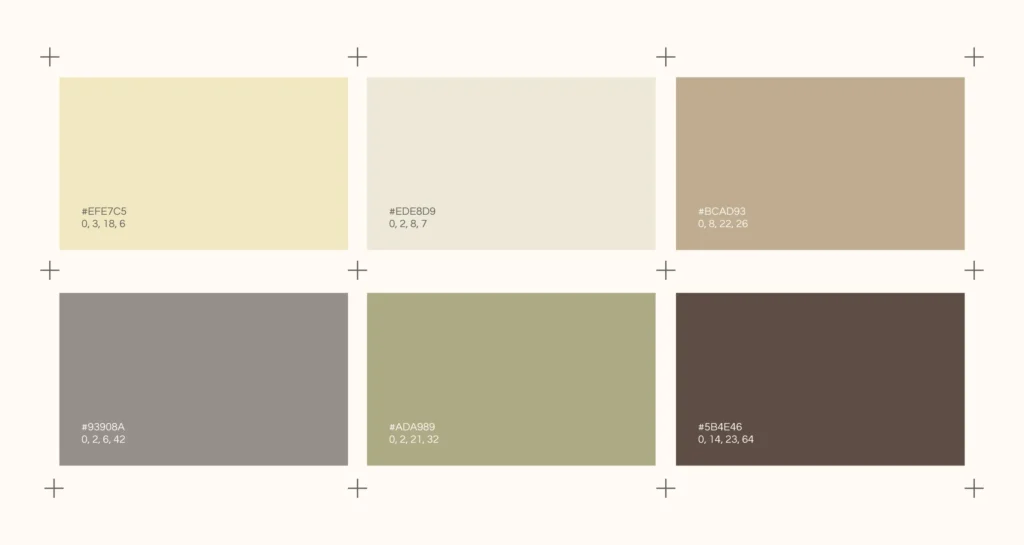
MarkaWorks projects show how much the starting problem shapes the result:
- On SNAX, market analysis at the start found the shelf split between two looks, and the case records that “that gap defined the brief”. Three strategic pillars were set before any drawing began.
- On Fluxus Coffee, MarkaWorks first built the identity in 2020; when the brand came back as an established business, the case describes the brief as “a question about what to keep”.
- On Herschel’s Coffee Co., the work began from five keywords: vintage, upscale, associative, bold and eye-catchy.
Keywords help, and they work best next to a plain description of the problem. A designer can answer “our bags look like every other specialty roaster’s” far more precisely than “we want to look premium”.
The product as it will be made
A physical product cannot be designed without this part. Write down every format and size the brand has to appear on, the material of each pack, and the supplier who will produce it.
Ask the supplier for the dielines, the flat drawings of each pack with its folds, seals and safe areas, before the design starts. The artwork is drawn to those lines. If the supplier has not been chosen, say so, and say which print method you expect, because it affects colours, finishes and the minimum order. That choice is set out in which printing method suits how many units.
Include the small parts as well. A barcode needs space and a light background, as barcode colours and size explains. A coffee bag carries a valve, and a tea tin may sit inside a box; choosing a coffee bag and choosing packaging for loose leaf tea cover both.
Markets and the mandatory information
List every country you sell into now and every one you plan to enter within the life of the design. The rules of each market decide how much of the pack is taken up by required information before the brand gets any space.
For food in the UK and the EU, Article 9 of Regulation (EU) No 1169/2011 lists 12 mandatory particulars, from “(a) the name of the food” to “(l) a nutrition declaration”, with allergens, net quantity, the durability date and the business name and address in between. Article 13 sets a minimum x-height of 1,2 mm, or 0,9 mm on packs whose largest surface is under 80 cm². Cosmetics, drinks and other categories have their own rules, so name the category and let the agency check the right text.
If you already have approved label copy from a regulatory adviser, attach it. If a second market is planned, what changes on the label when you enter a second market shows what has to change.
The name and its trade mark status
Say whether the name is fixed, open to change or still to be found, and what has been checked. In the UK, the government’s trade mark search lets you “check if a similar trade mark to your brand already exists in the UK”, searching by keyword, phrase, image, number or owner. Similar registers exist in other markets.
A search is a first check and does not replace advice from a trade mark attorney. It does tell you whether the name is worth building an identity around. Record the answer in the brief, along with any registrations you hold and the classes they cover.
The same question applies to colours and shapes you hope to protect. What a registry needs before it will accept a colour is explained in whether you can trademark a colour.
Scope, and what is already decided
Close the brief with what you expect to receive and what is not open for discussion. On Sophia’s Tea, the case states the scope as logo design, palette, pattern work and label design. That kind of plain list lets an agency quote the same thing you think you are buying.
Also record the decisions already made: a logo you want to keep, a colour the trade already recognises, a sub-brand that has to stay separate. Fluxus kept everything in its original identity that was still doing its job, and that decision set the boundaries of the project. If you are unsure whether a new product line should carry the main brand, one brand or a family of brands sets out the choice.
A timeline belongs here too, tied to a real event such as a trade show, a retailer listing or a production slot. The timing can be set with how long a branding project takes, and the deliverables worth naming are listed in what is included in a brand identity project.
What this guide leaves out
The label rules quoted here are the UK and EU food regulation. They do not cover cosmetics, drinks with alcohol or other regulated categories, and they are not legal advice. A trade mark search on a public register is a first check, not clearance.
We have also left budget out of the brief structure on purpose. Cost depends on scope, range size and the number of markets, and it is better discussed once the brief exists than guessed before it.
Questions brand owners ask about briefs
What should a branding brief include for a physical product?
The business problem, the buyers and where they shop, the competitors on the same shelf, the pack formats and materials, the markets and their mandatory label information, the name and its trade mark status, and the scope of work with any decisions already made.
How long should a branding brief be?
Long enough to answer the 8 parts honestly. A short line per part, with attachments such as dielines and approved label copy, is more useful than a long document written to sound complete. Unknown answers can be marked as not decided.
Should I check the trade mark before writing the brief?
Run a first search, such as the UK government’s trade mark search, and record the result in the brief. A public search does not replace advice from a trade mark attorney, but it shows whether the name is worth building an identity around.
Do I need dielines before the design starts?
Ideally yes. The dielines from your packaging supplier show the folds, seals and safe areas of each pack, and the artwork is drawn to them. If the supplier is not chosen yet, say so in the brief and name the print method you expect.
Should the brief include a budget?
It helps to say whether a budget is fixed, but this article leaves figures out. Cost depends on scope, range size and the number of markets, so it is easier to agree once the brief sets those out.
If you are preparing a brief, send what you have through our contact page, even if some parts say not decided yet, and we will tell you what the design work needs from it. Our brand strategy and visual identity and packaging and product design services start from this document.
The business problem, the product as it will be made, and the decisions an agency should not have to guess.
More brands we brought to life: